Execution scheduled for Sept. 17 •
Call Governor Ivey
(334) 242-7100
•
Execution scheduled for Sept. 17 • Call Governor Ivey (334) 242-7100 •
LATEST NEWS
-
![]()
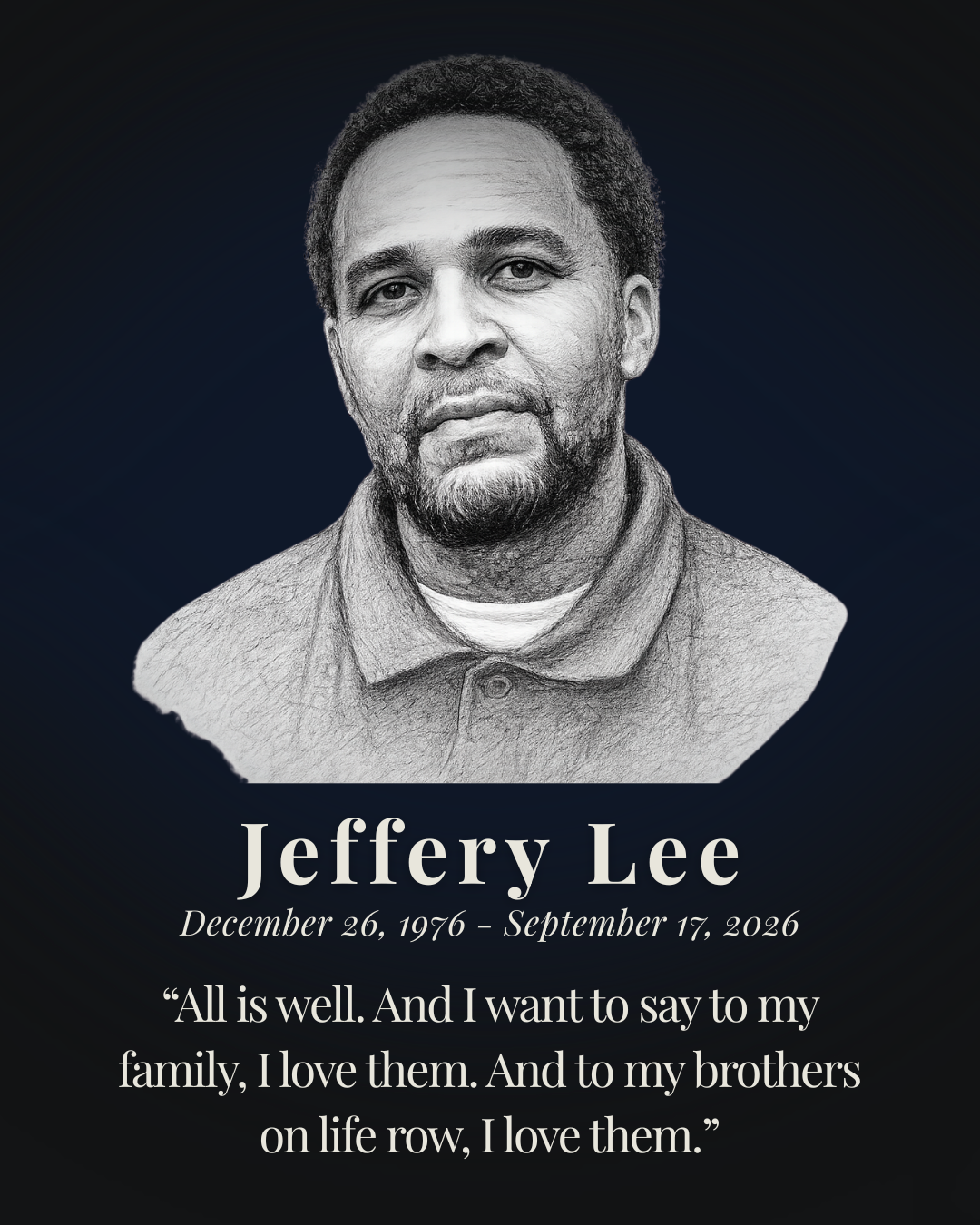
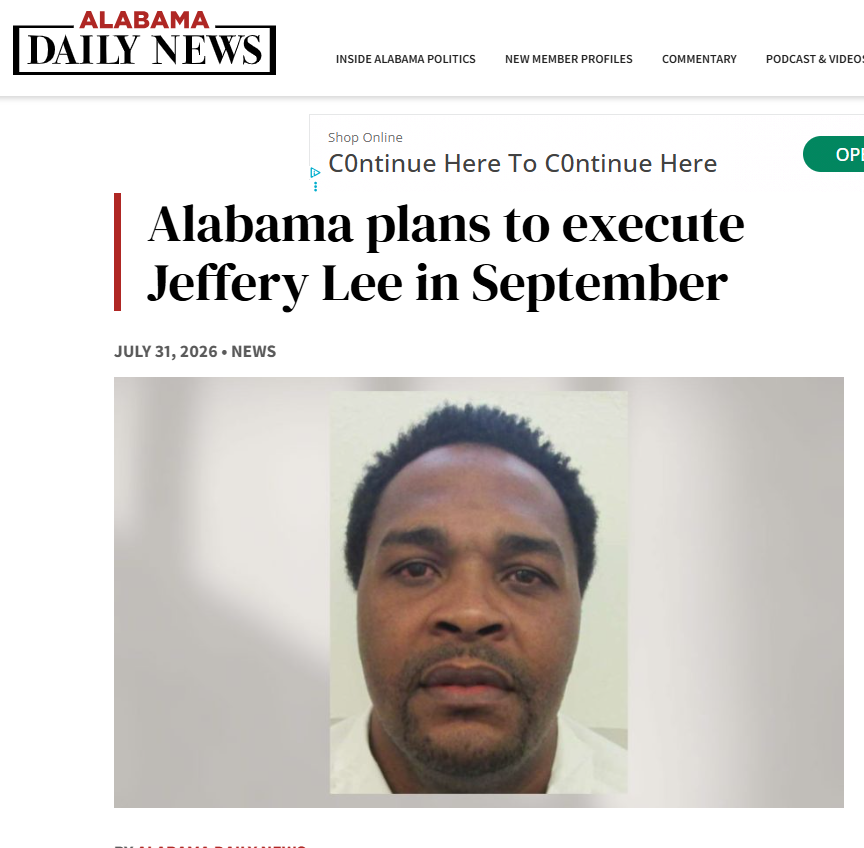
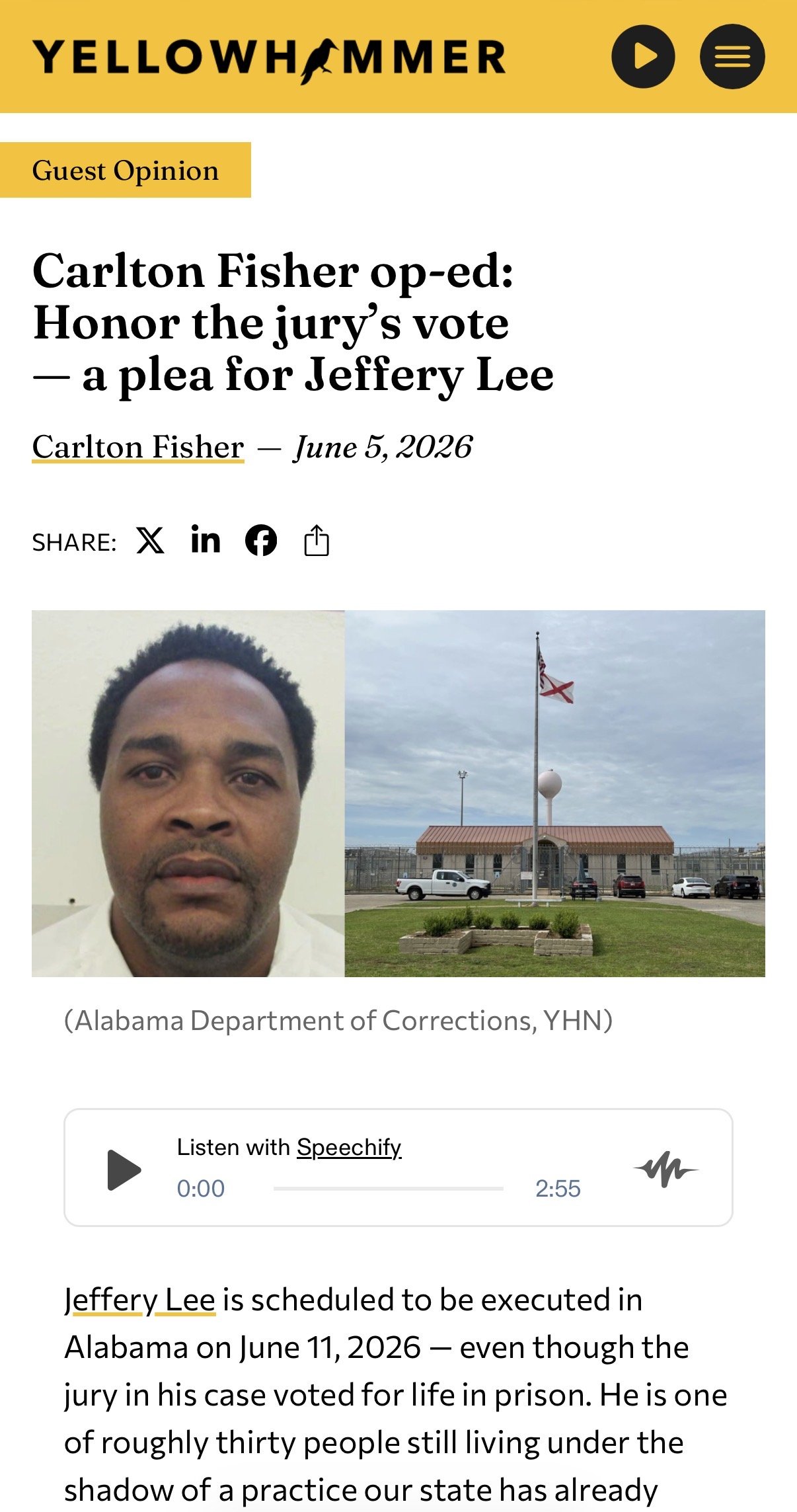
Jeffery Lee
December 26, 1976 – September 17, 2026
“All is well. And I want to say to my family, I love them. And to my brothers on life row, I love them.” – Jeffery Lee
-
![]()
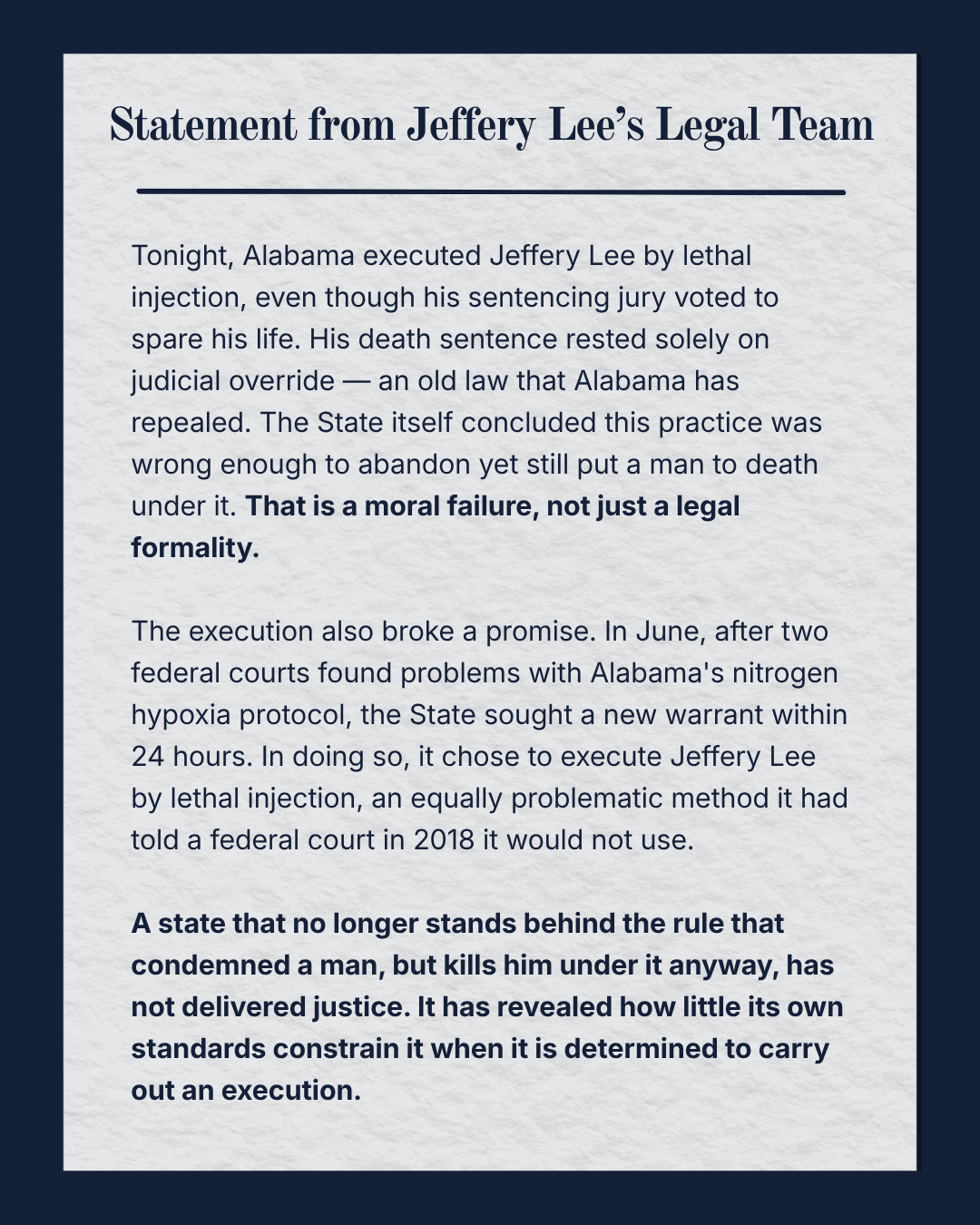
statement from Jeffery's legal team
A state that no longer stands behind the rule that condemned a man, but kills him under it anyway, has not delivered justice. It has revealed how little its own standards constrain it when it is determined to carry out an execution.
-
![]()
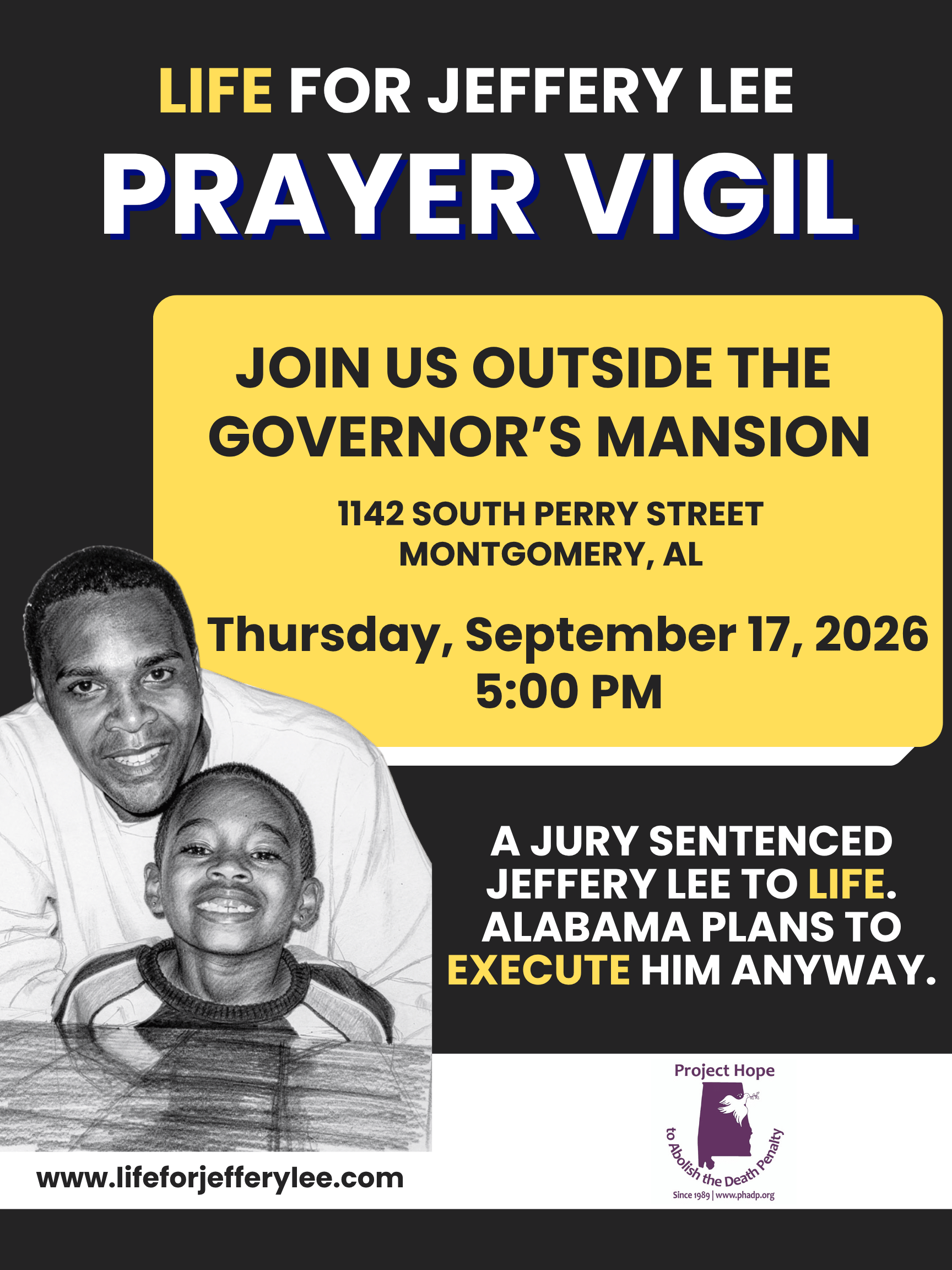
prayer vigil
As Alabama prepares to execute Jeffery Lee, we will gather in prayer. Join us on Thursday, September 17 at 5pm on the public sidewalk outside the Governor’s mansion. We will honor the jury that voted for his life. We will gather to pray that Governor Ivey finds it within herself to create a legacy built on righting the wrongs of the past and honor the jury’s sentence of life without parole. Whatever Thursday brings, Jeffery will not stand alone, and neither will his family.
-
![]()
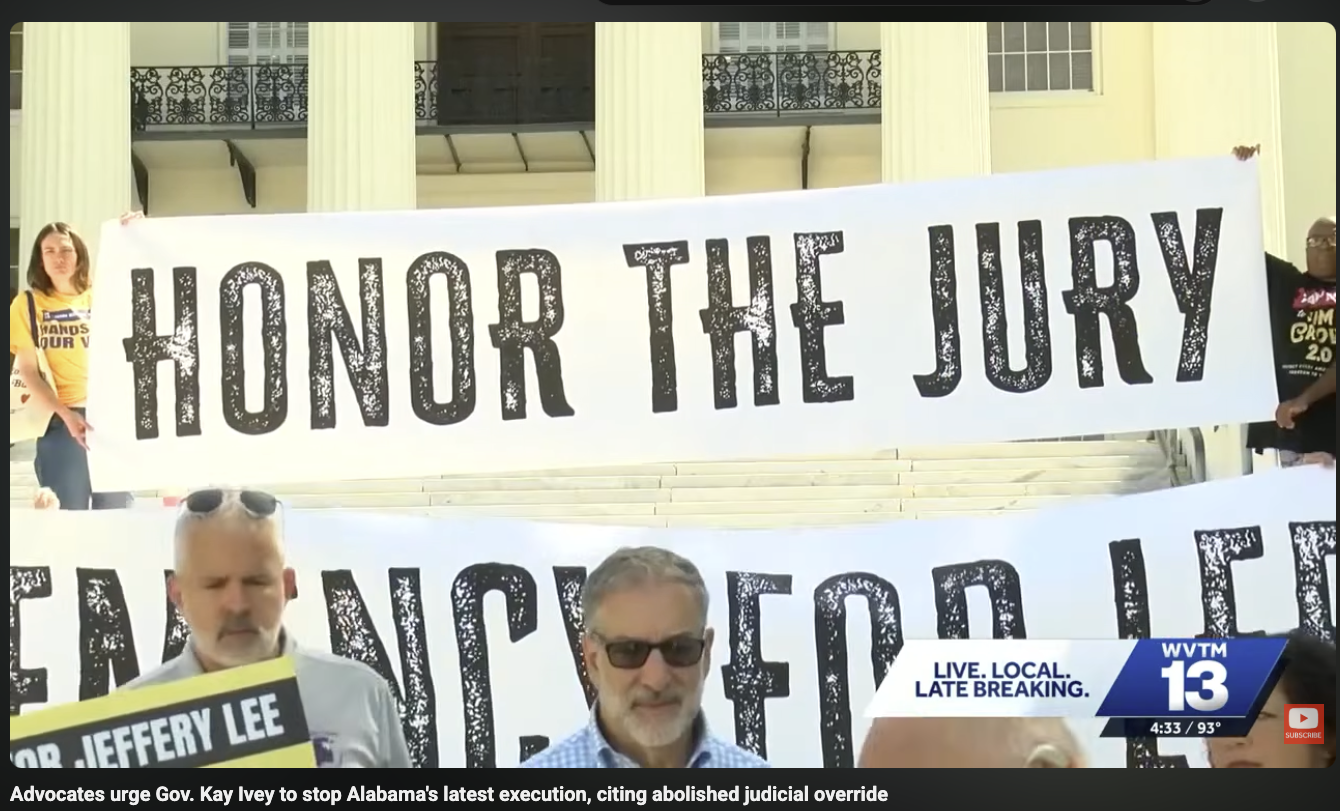
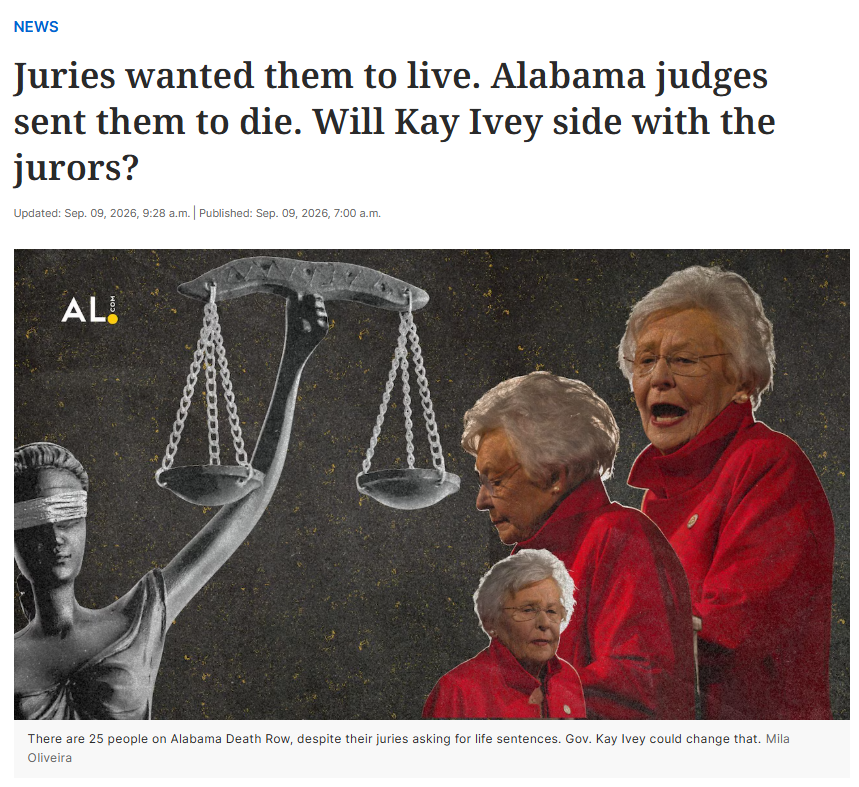
Advocates urge Gov. Kay Ivey to stop Alabama's latest execution, citing abolished judicial override
WVTM 13 News
Calls are growing to halt an Alabama execution scheduled for Thursday.
When Lee was found guilty, the jury recommended a sentence of life in prison. A judge overruled that recommendation and imposed the death penalty.
-
![]()
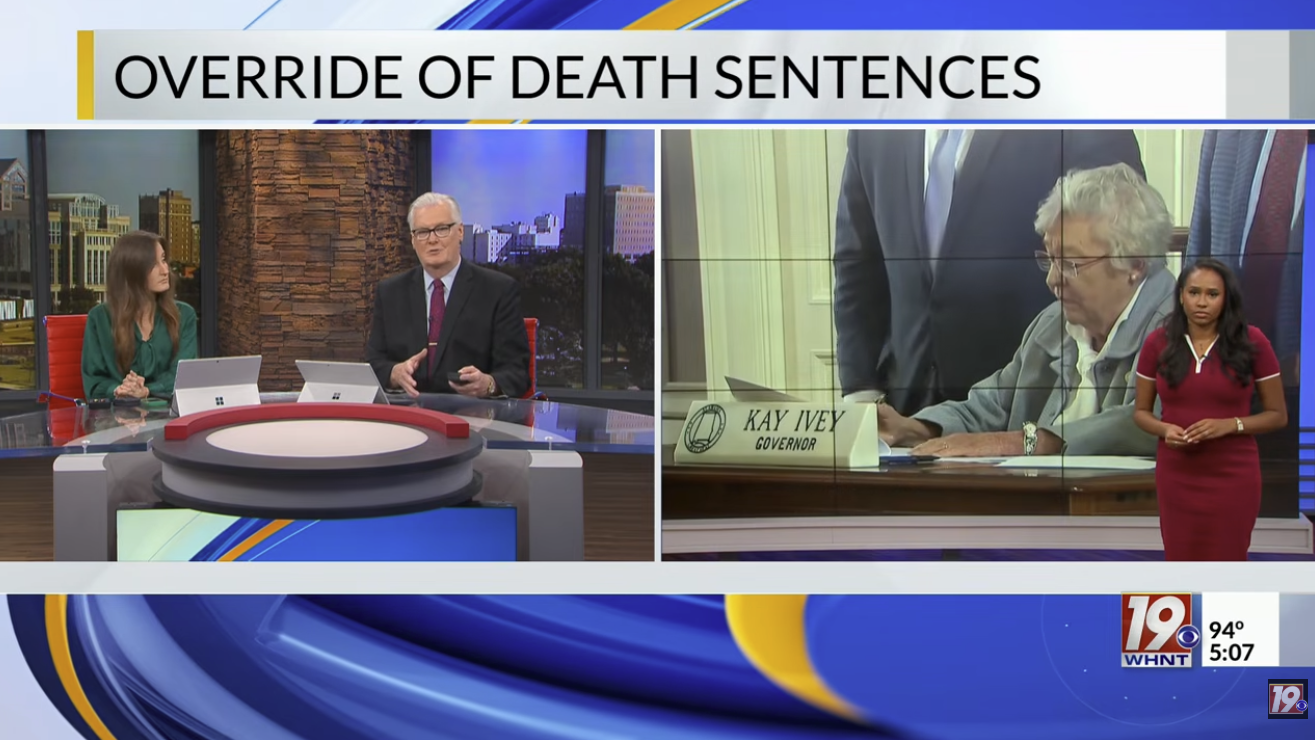
ACLU Urges Governor To Review Judicial Override Cases
Sept. 16, 2026 | News 19
The ACLU is asking Gov. Kay Ivey to review death row cases involving judicial override.
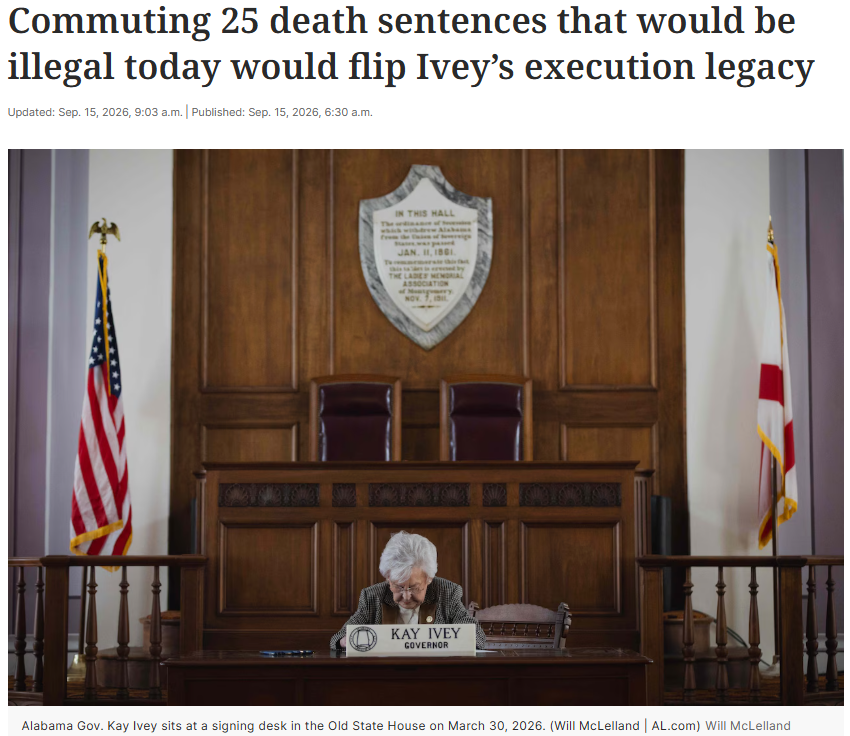
Alabama eliminated judicial override in 2017. The law did not apply retroactively leaving 25 people on death row.
“If we’ve made a determination as a state that this is the law going forward, it’s only appropriate and fair and just to apply that same law to the people that are currently on death row with those verdicts,” said Alison Molman of the ACLU of Alabama.
-
![]()
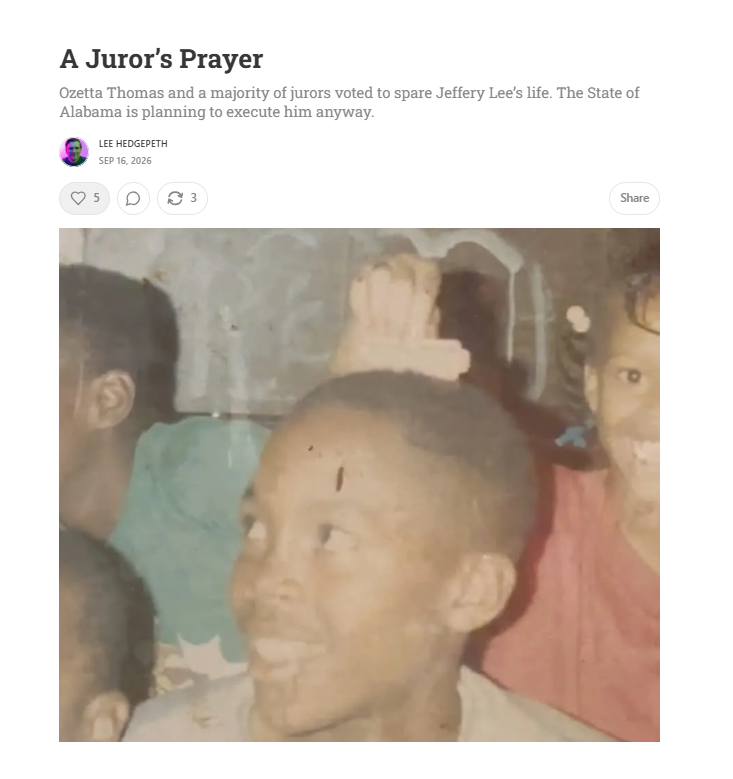
"EXECUTING HIM WOULD BE AN INJUSTICE. AND IT WOULD BREAK MY HEART." – OZETTA THOMAS
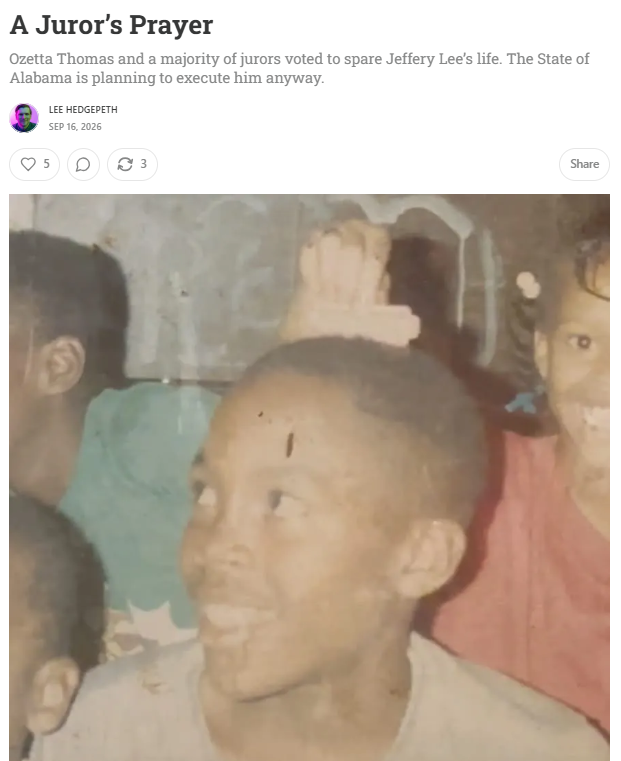
September 16, 2026 – In his latest substack article “A Juror’s Prayer,” Lee Hedgepeth spoke with Ozetta Thomas, one of the jurors who voted to spare Jeffery Lee’s life. In speaking with Lee, she breaks her silence on the eve of Jeffery’s execution to ask Governor Ivey for mercy.
-
![]()
will governor ivey choose to change her execution legacy?
Alabama is the only state that still puts to death those sentenced under judicial override.
The same jury that agreed unanimously to convict Lee also voted 7-5 that he should be sentenced to life without parole.
Judge Jack Meigs, presiding over the case, disagreed. Now, Lee is set to die by lethal injection.On Thursday. Unless Ivey stops it.
-
![]()
the jury wanted him to live
FROM THE NEW YORK TIMES:
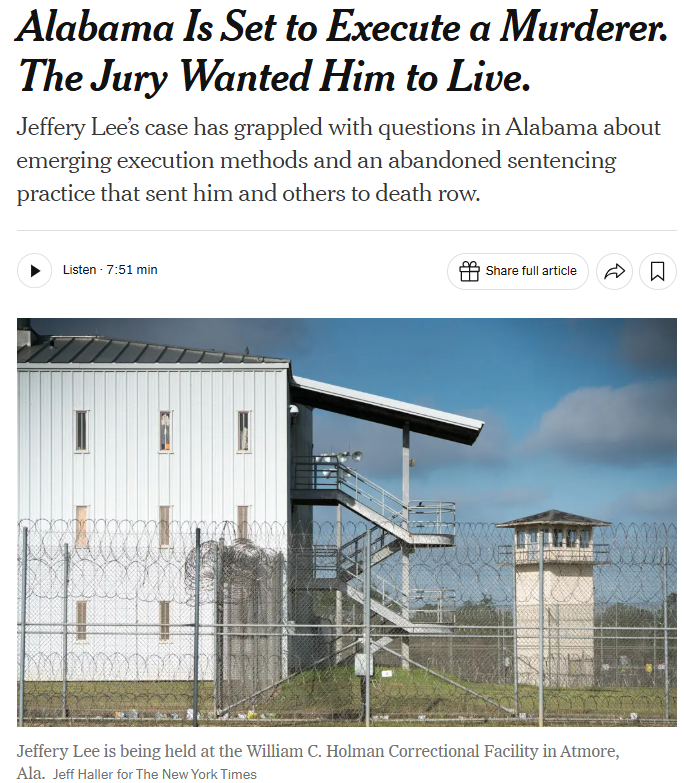
Jeffery Lee’s case has grappled with questions in Alabama about emerging execution methods and an abandoned sentencing practice that sent him and others to death row.Jurors voted unanimously to convict him. But when it came to deciding whether Mr. Lee should be put to death, most of the panel opted instead to sentence him to life in prison without parole.
“We’re still here,” said Mr. Lee, now 49, speaking by phone from death row in Atmore, Ala. “The guys are still here fighting for their lives.”
-
![]()
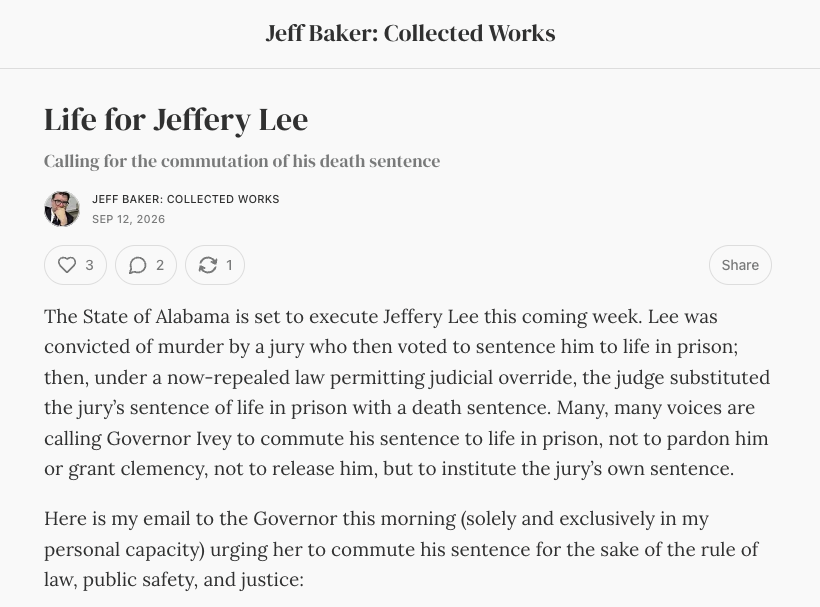
Life for Jeffery Lee Calling for the commutation of his death sentence
The State of Alabama is set to execute Jeffery Lee this coming week. Lee was convicted of murder by a jury who then voted to sentence him to life in prison; then, under a now-repealed law permitting judicial override, the judge substituted the jury’s sentence of life in prison with a death sentence. Many, many voices are calling Governor Ivey to commute his sentence to life in prison, not to pardon him or grant clemency, not to release him, but to institute the jury’s own sentence.
-
![]()
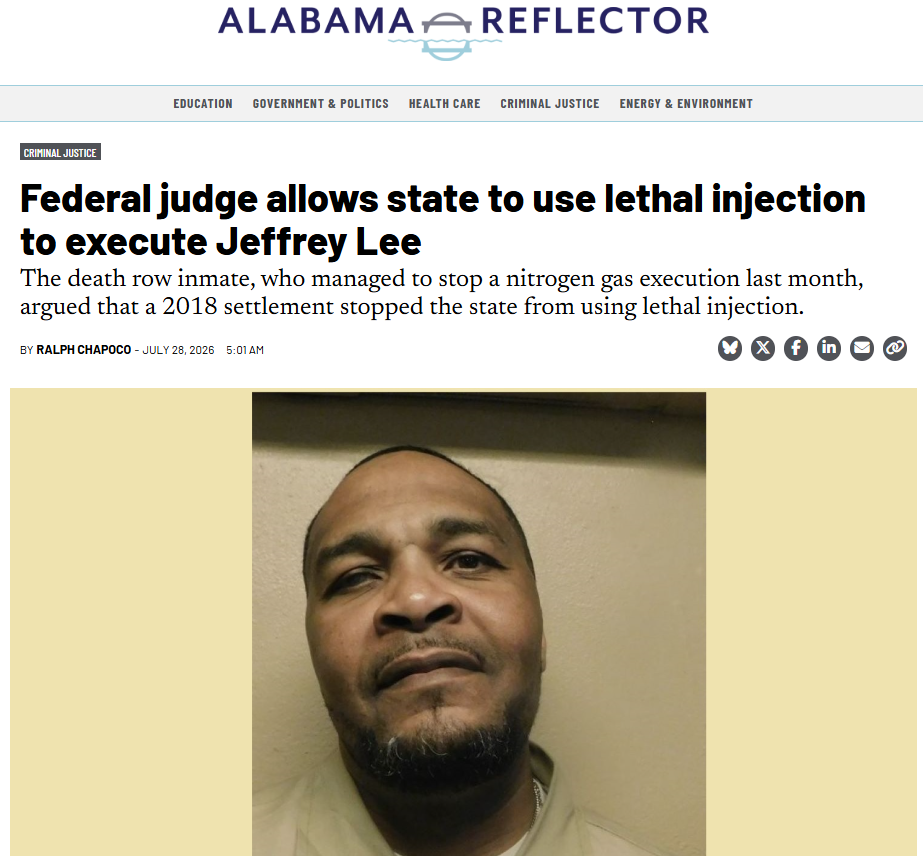
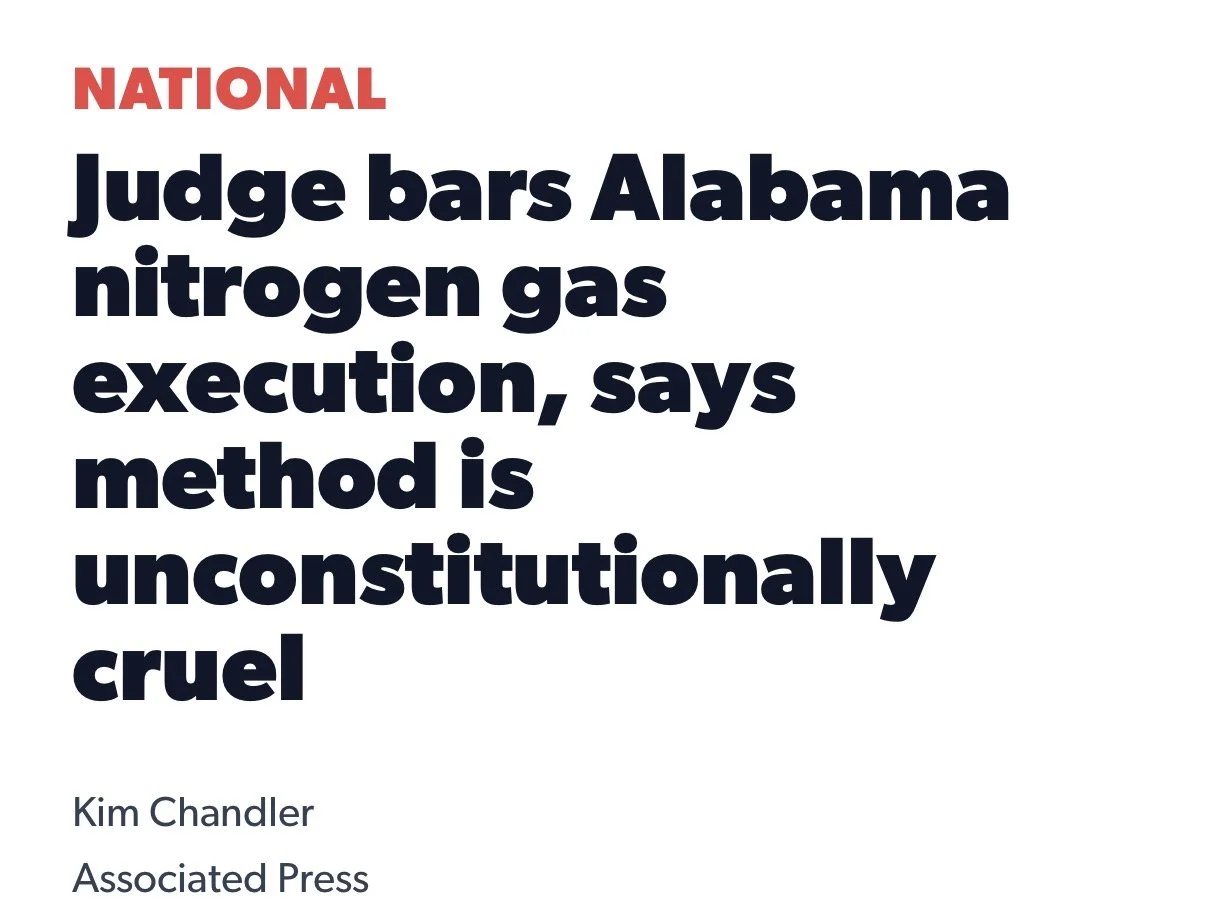
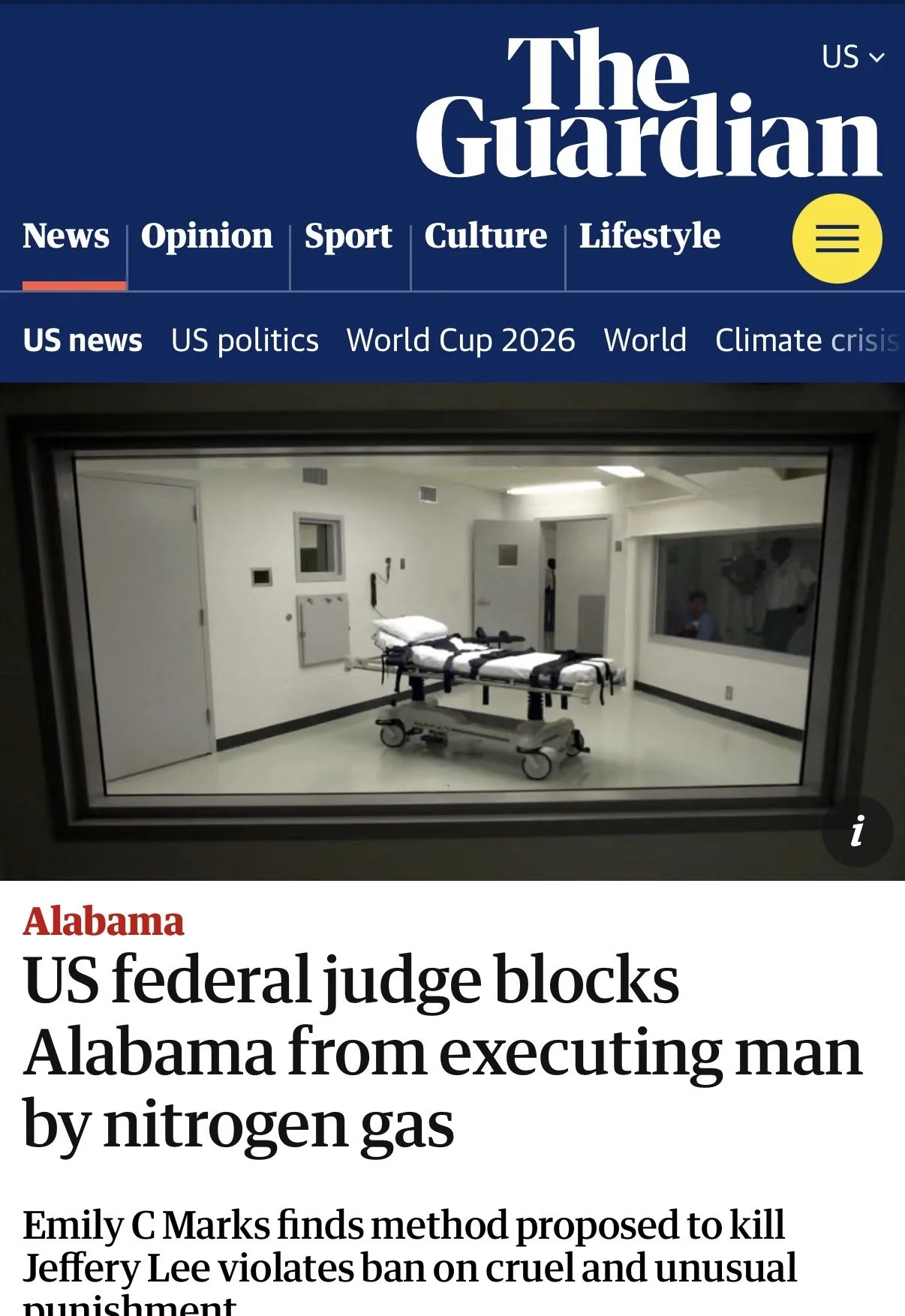
Federal judge allows state to use lethal injection to execute Jeffrey Lee
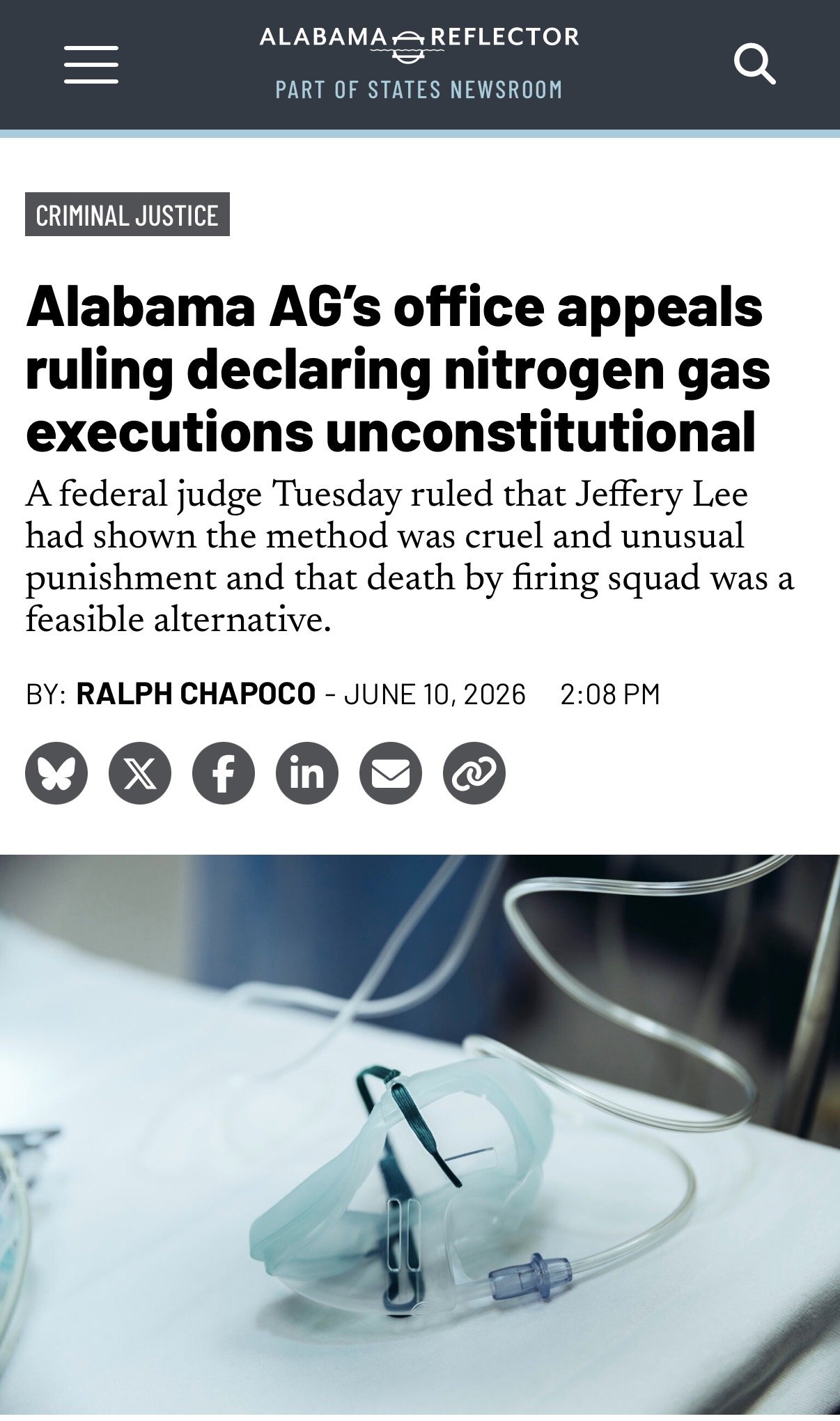
A federal district judge Wednesday denied an Alabama death row inmate’s request to stop the state from executing him by lethal injection after he successfully halted his nitrogen gas execution.
In a 16-page opinion, U.S. District Judge Emily Marks rejected Jeffrey Lee’s argument that a 2018 settlement with the state prevented it from using lethal injection on him, writing that her June injunction against the state’s use of nitrogen gas executions was “narrowly tailored” to address its use and that the ruling would not “further delay” his execution.
audio clips: jeffery lee in his own words
(recorded in August 2026)
recent events
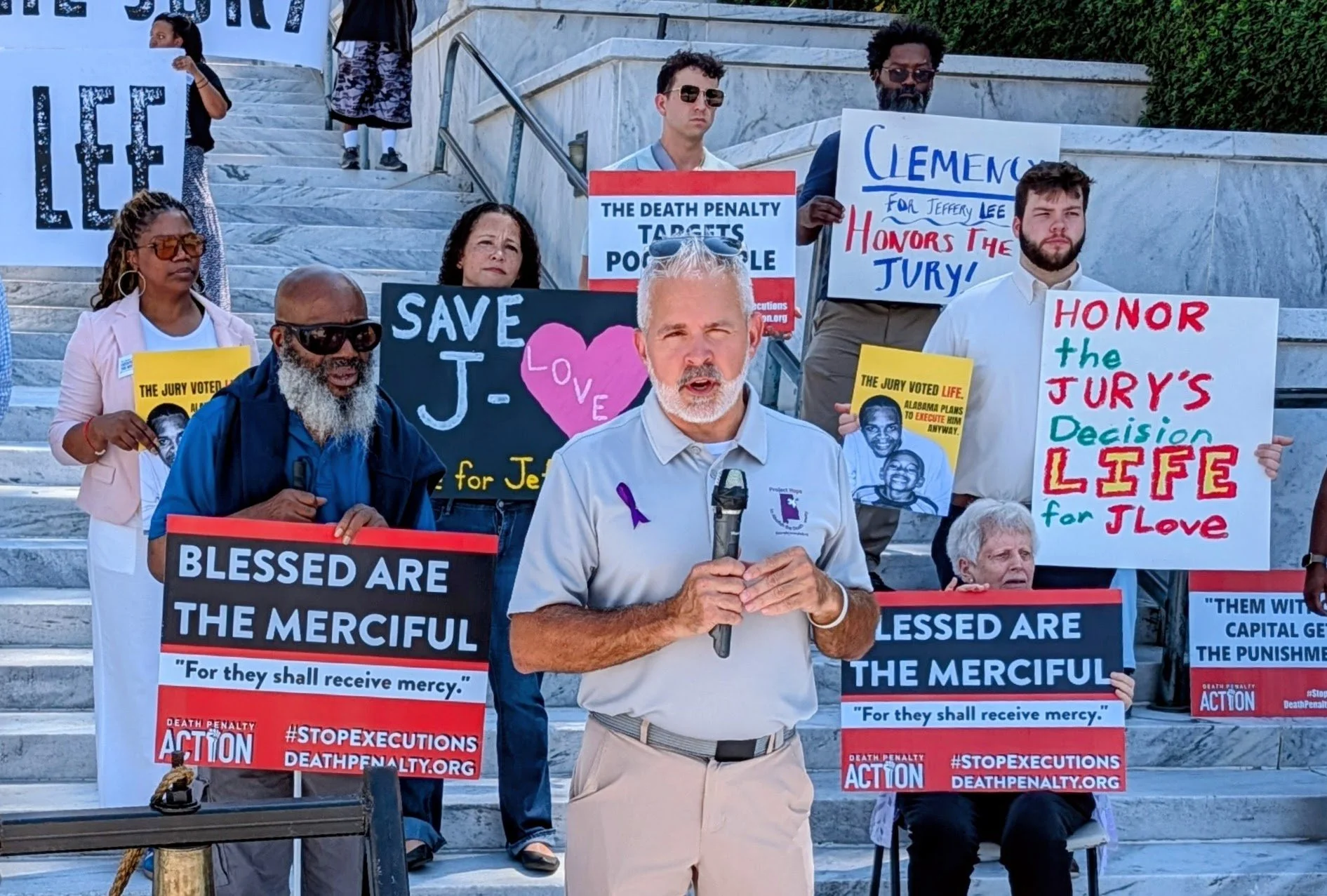
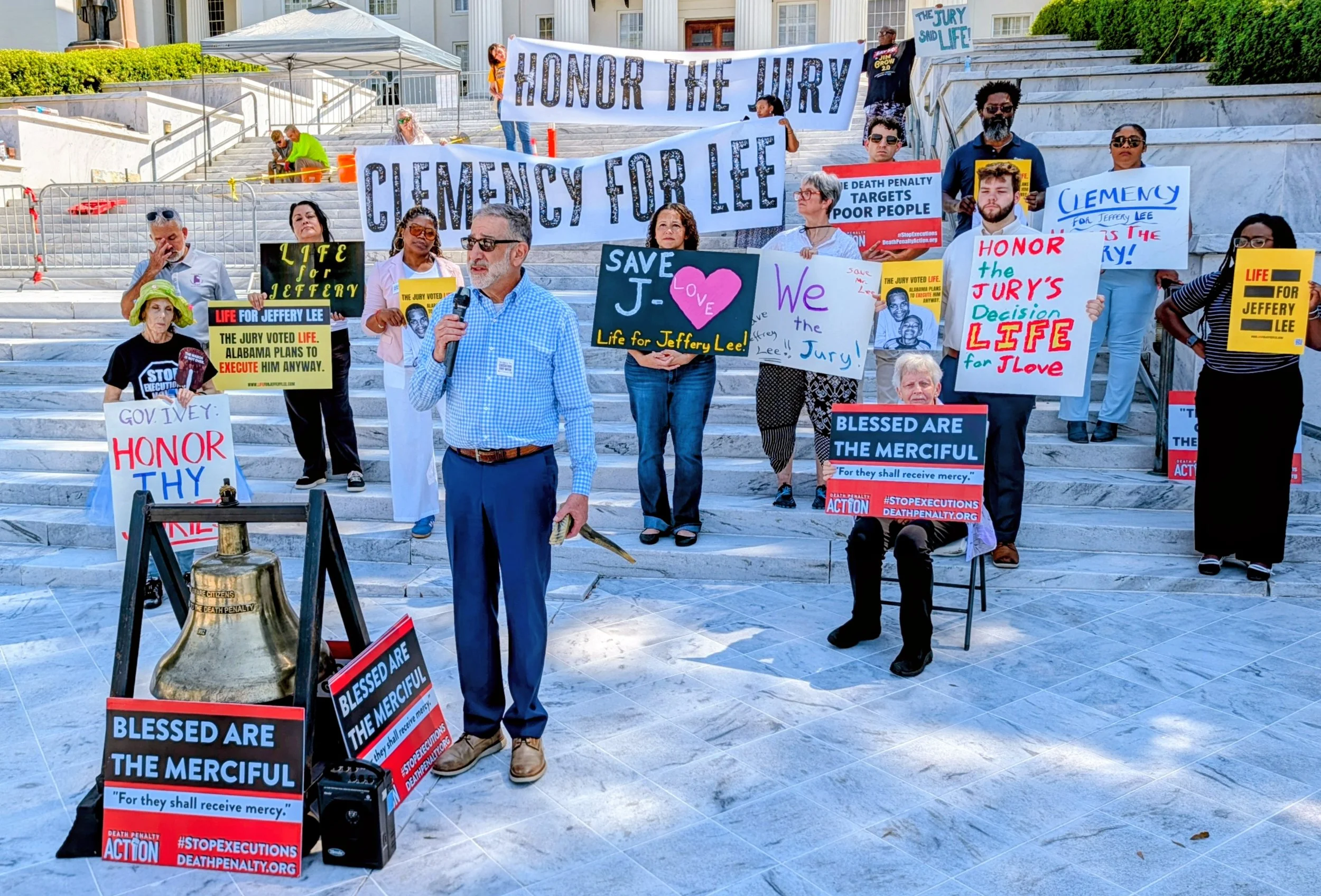
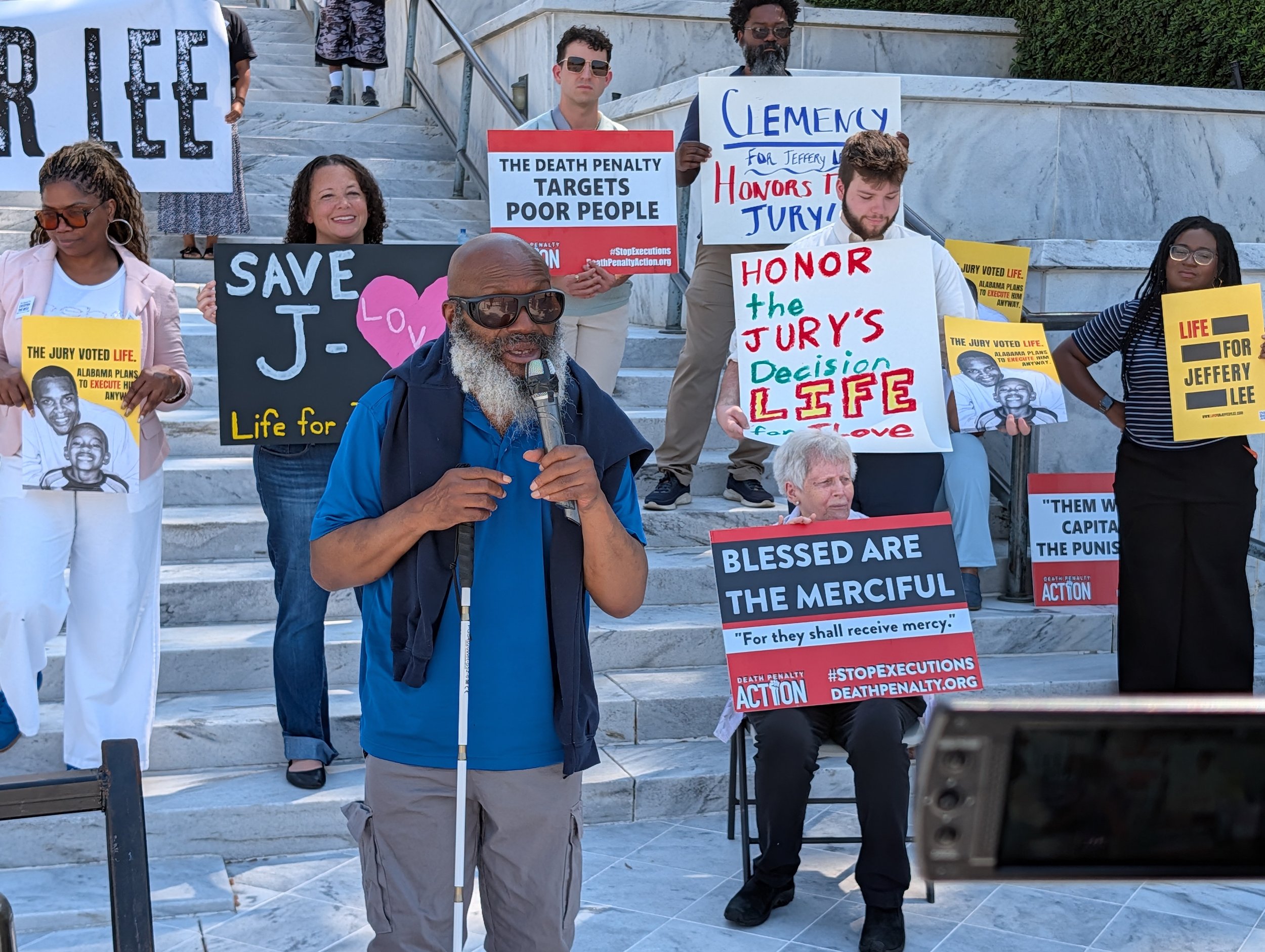
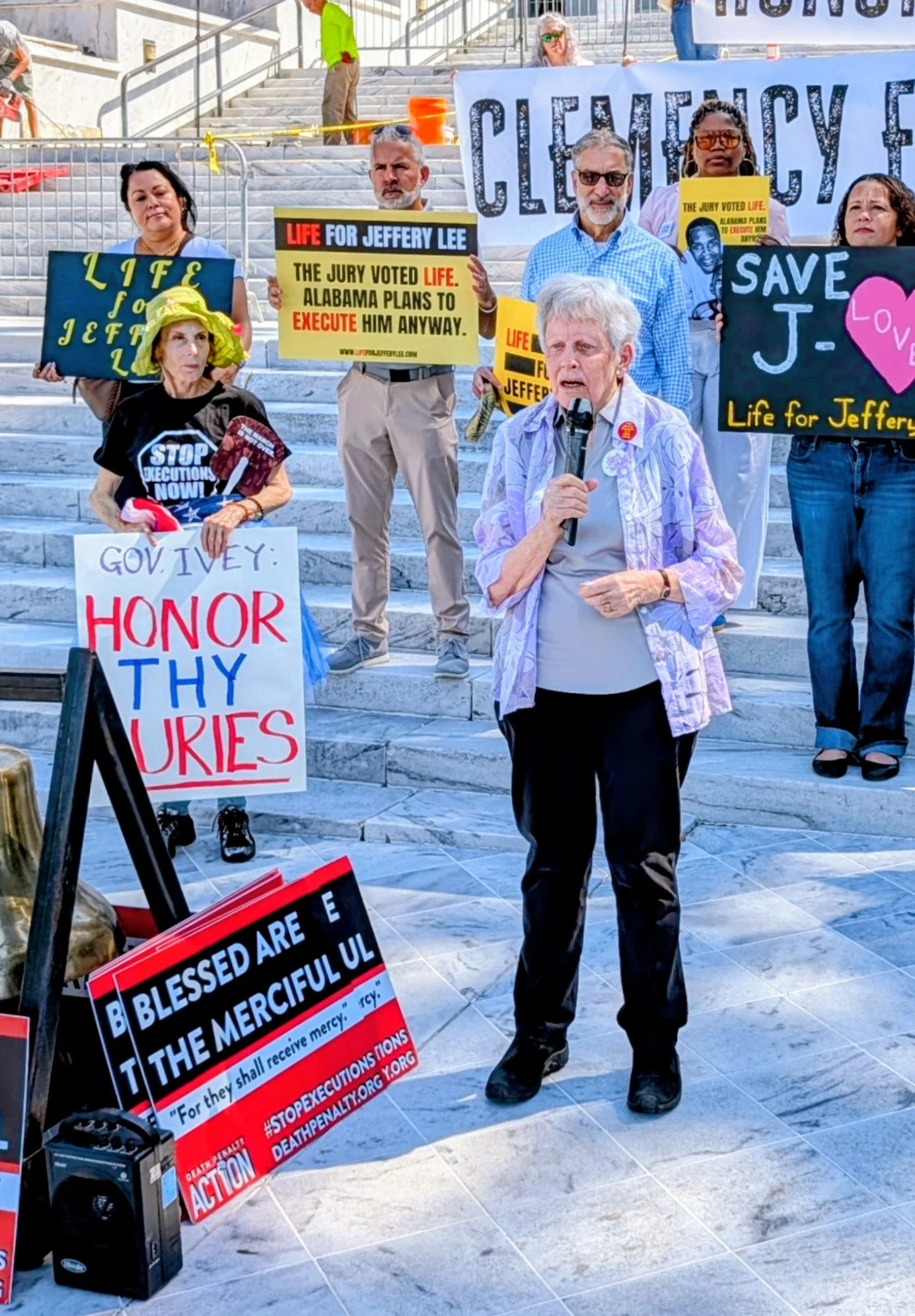
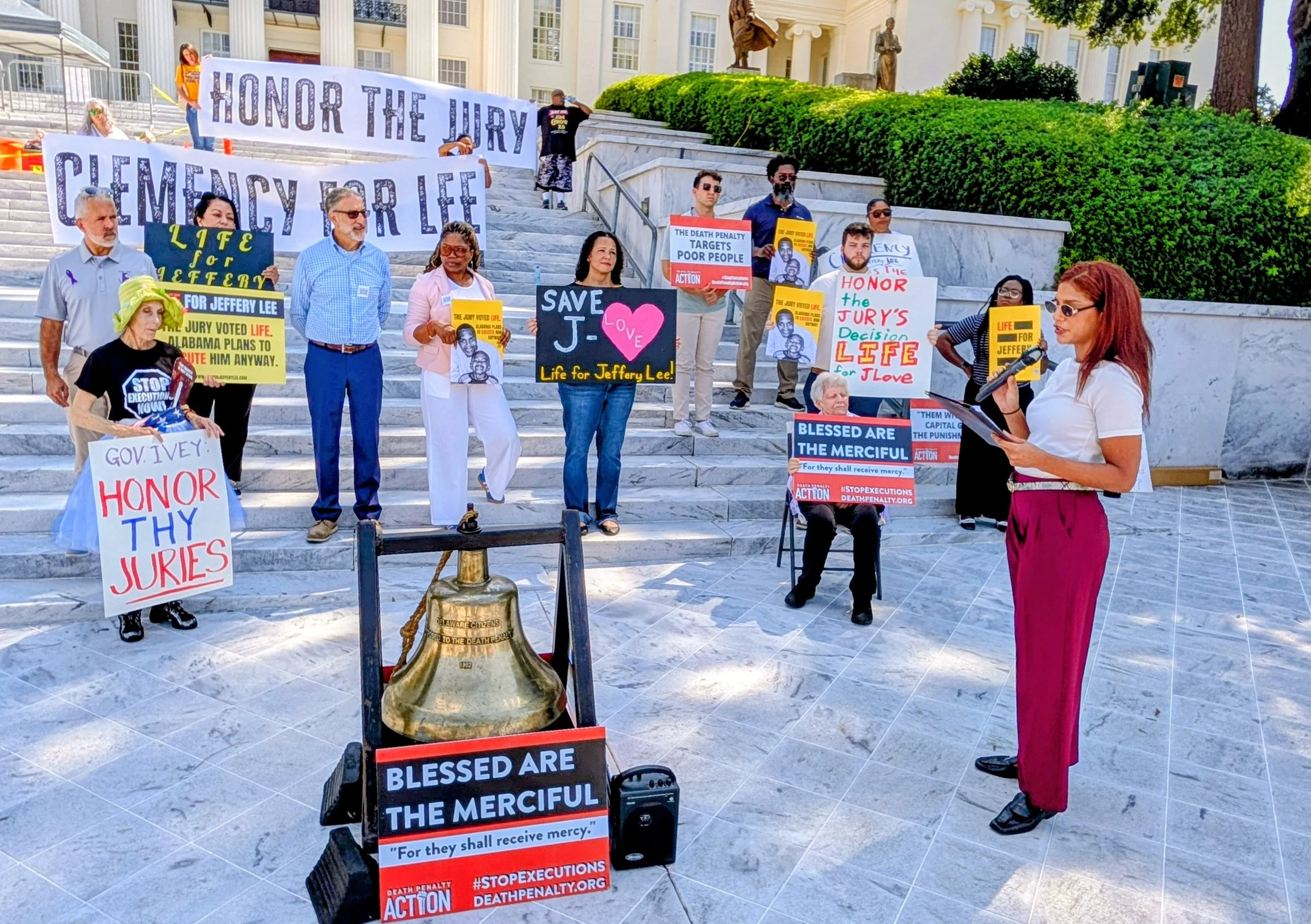
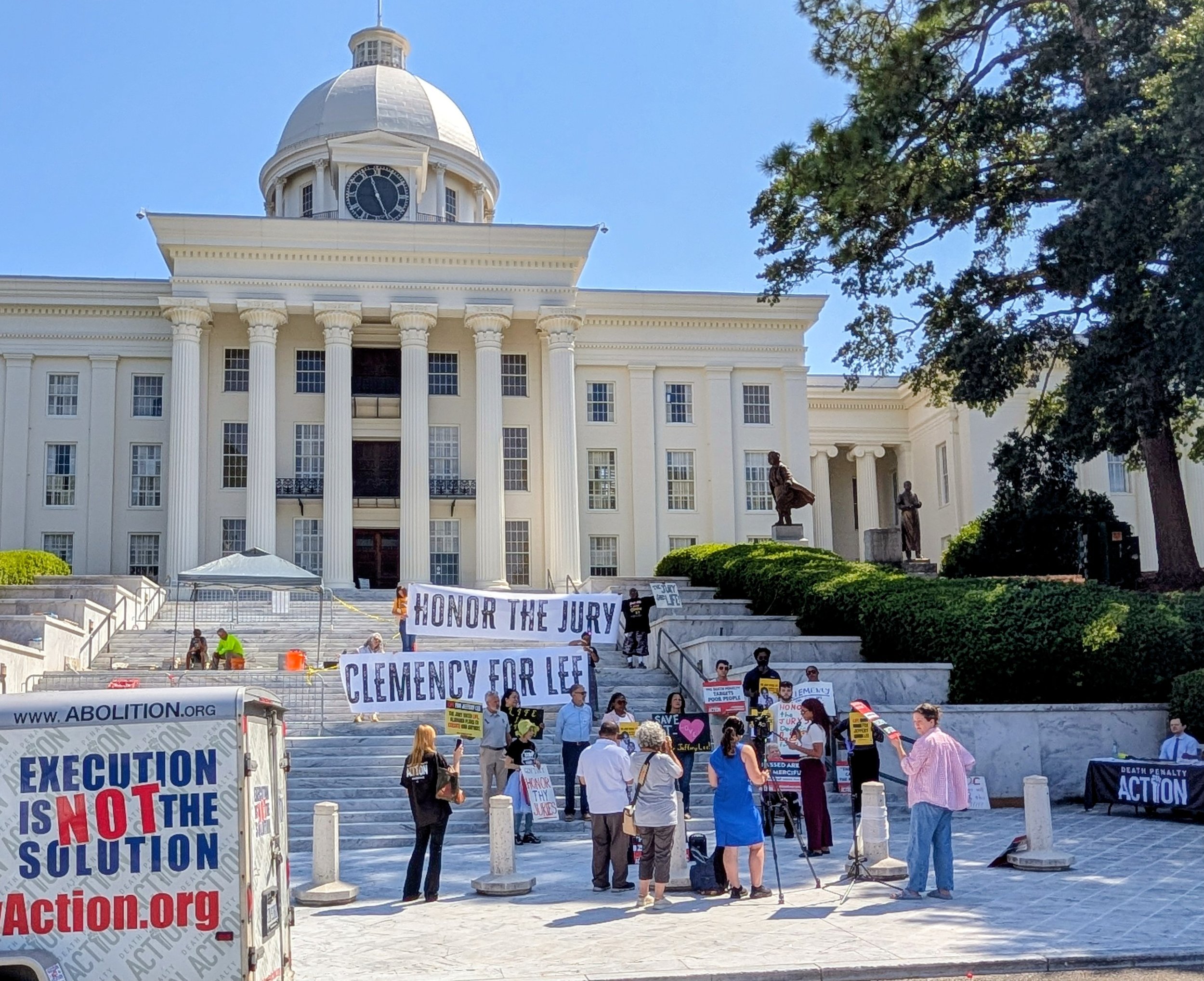
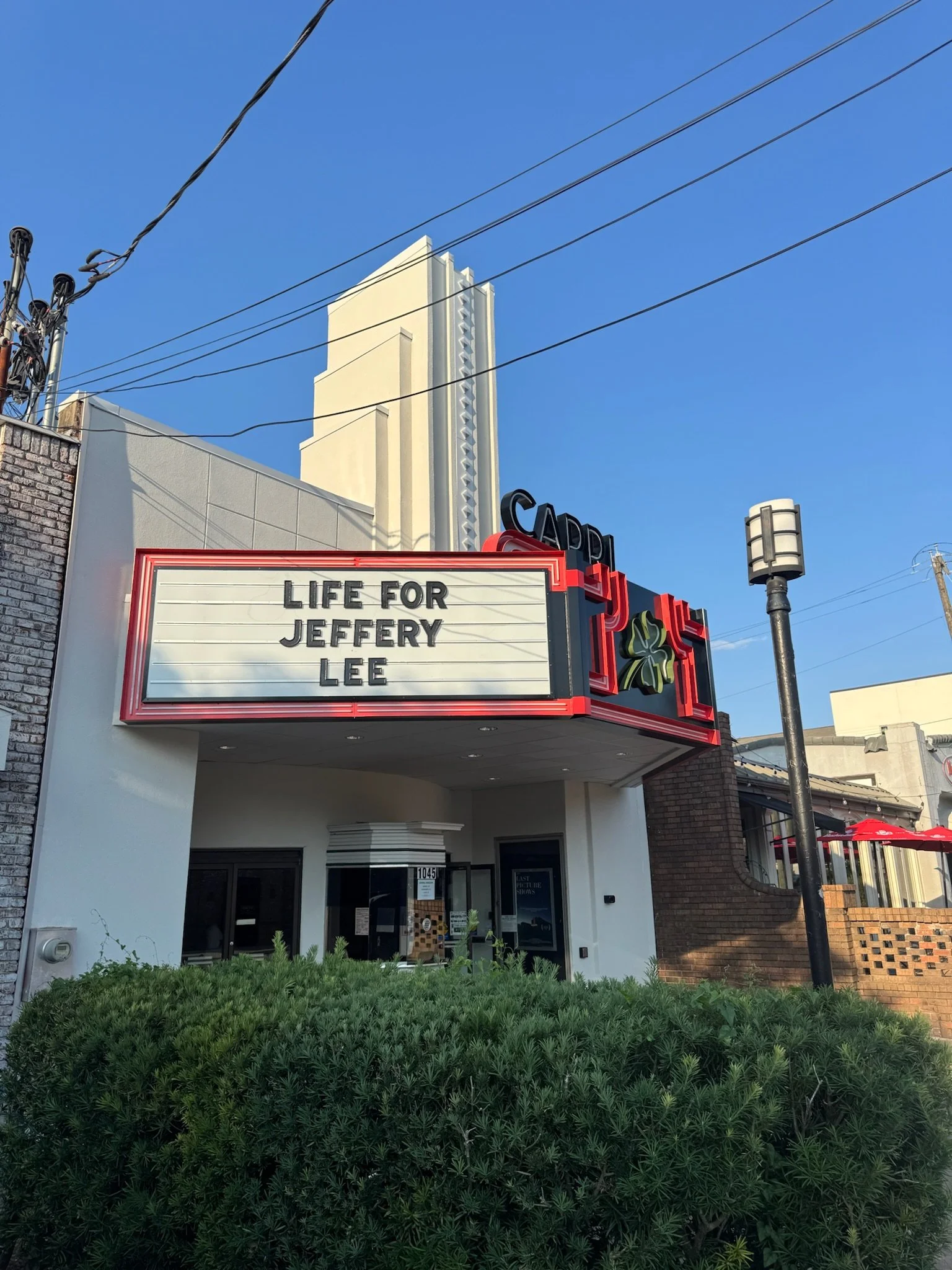
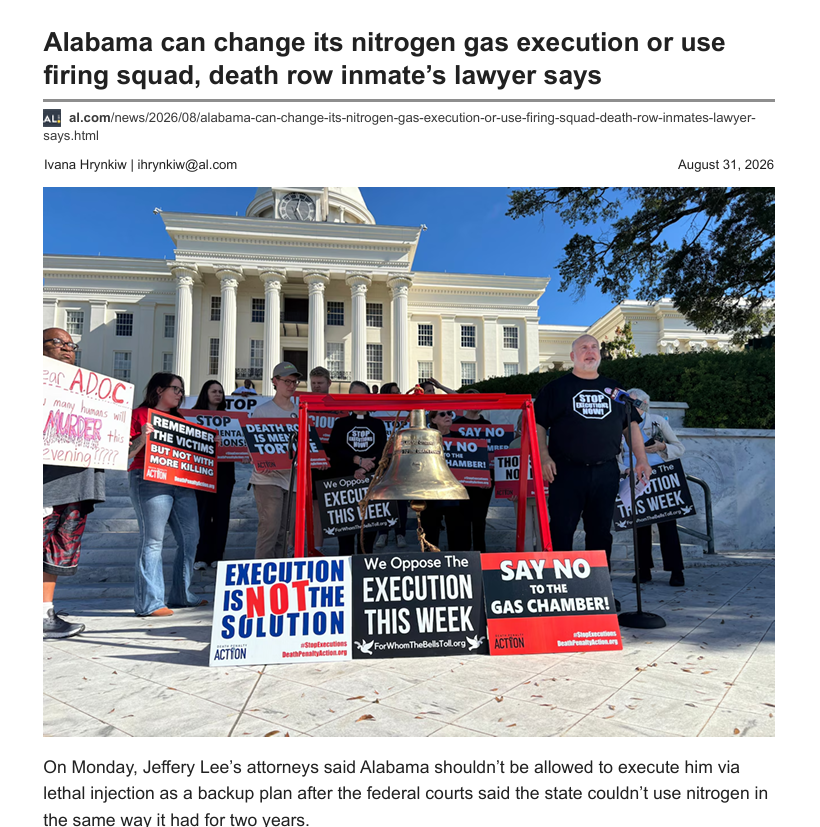
(L-R top row) Supporters on the steps at the Alabama State Capitol building for the petition drop and rally.
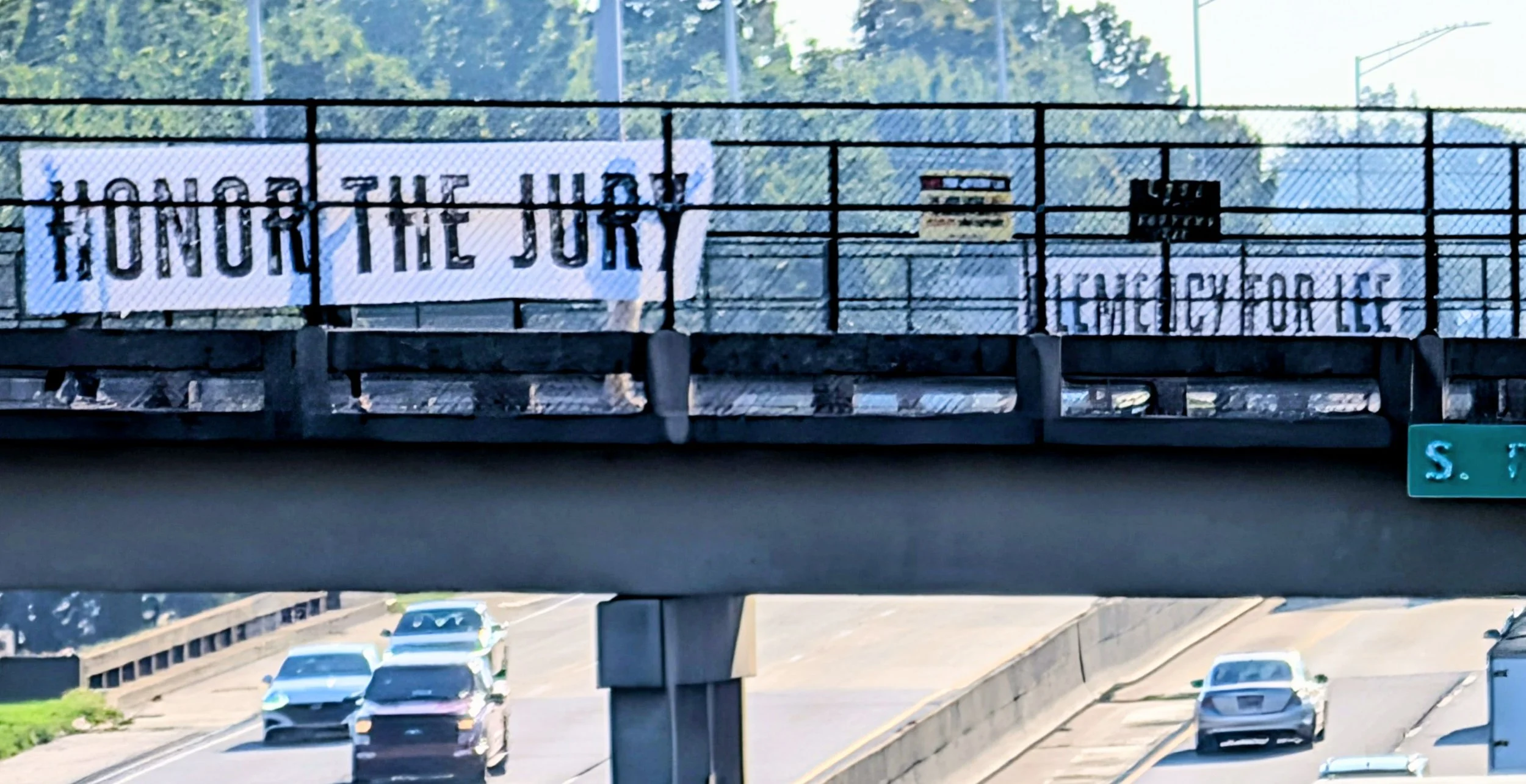
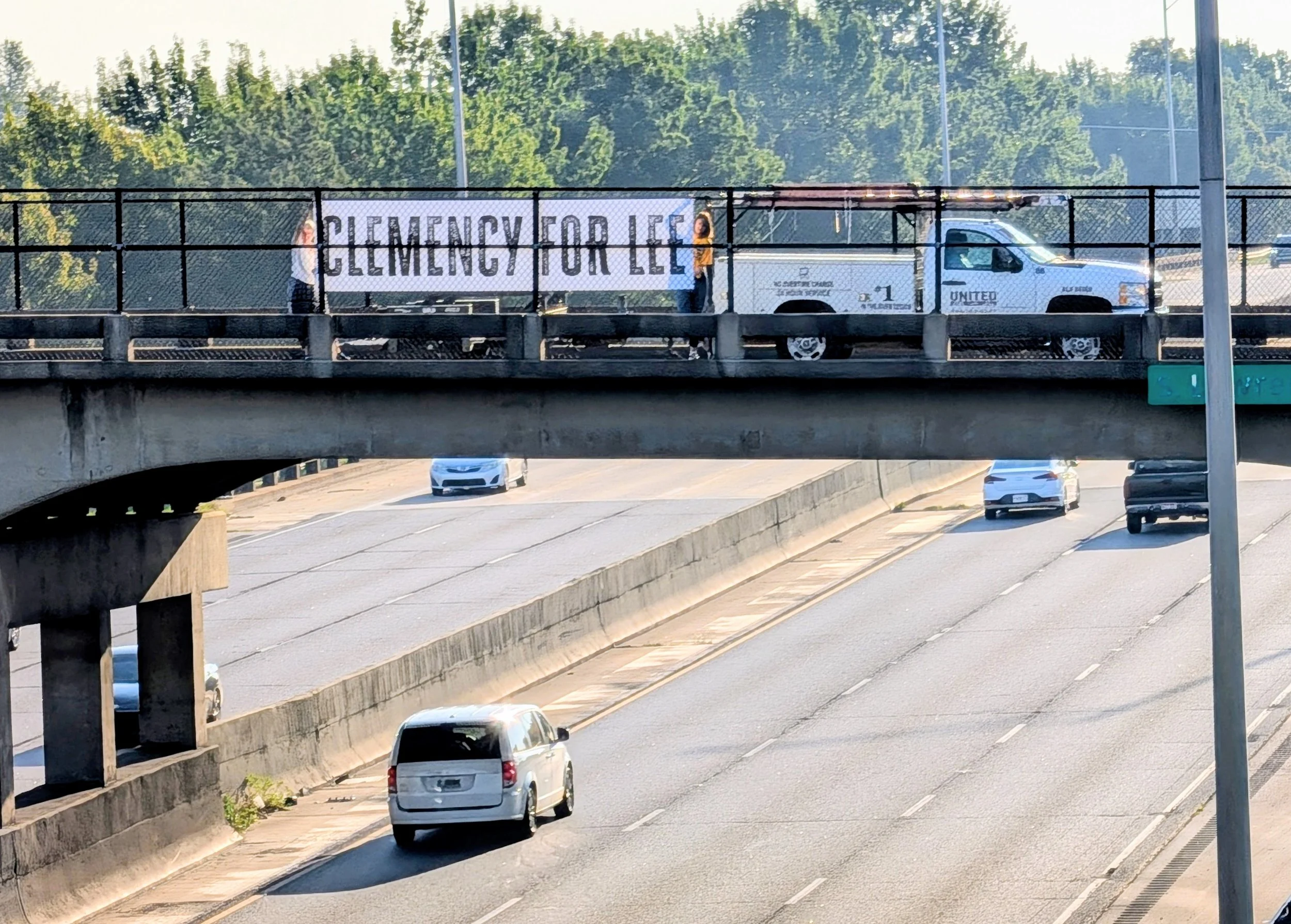
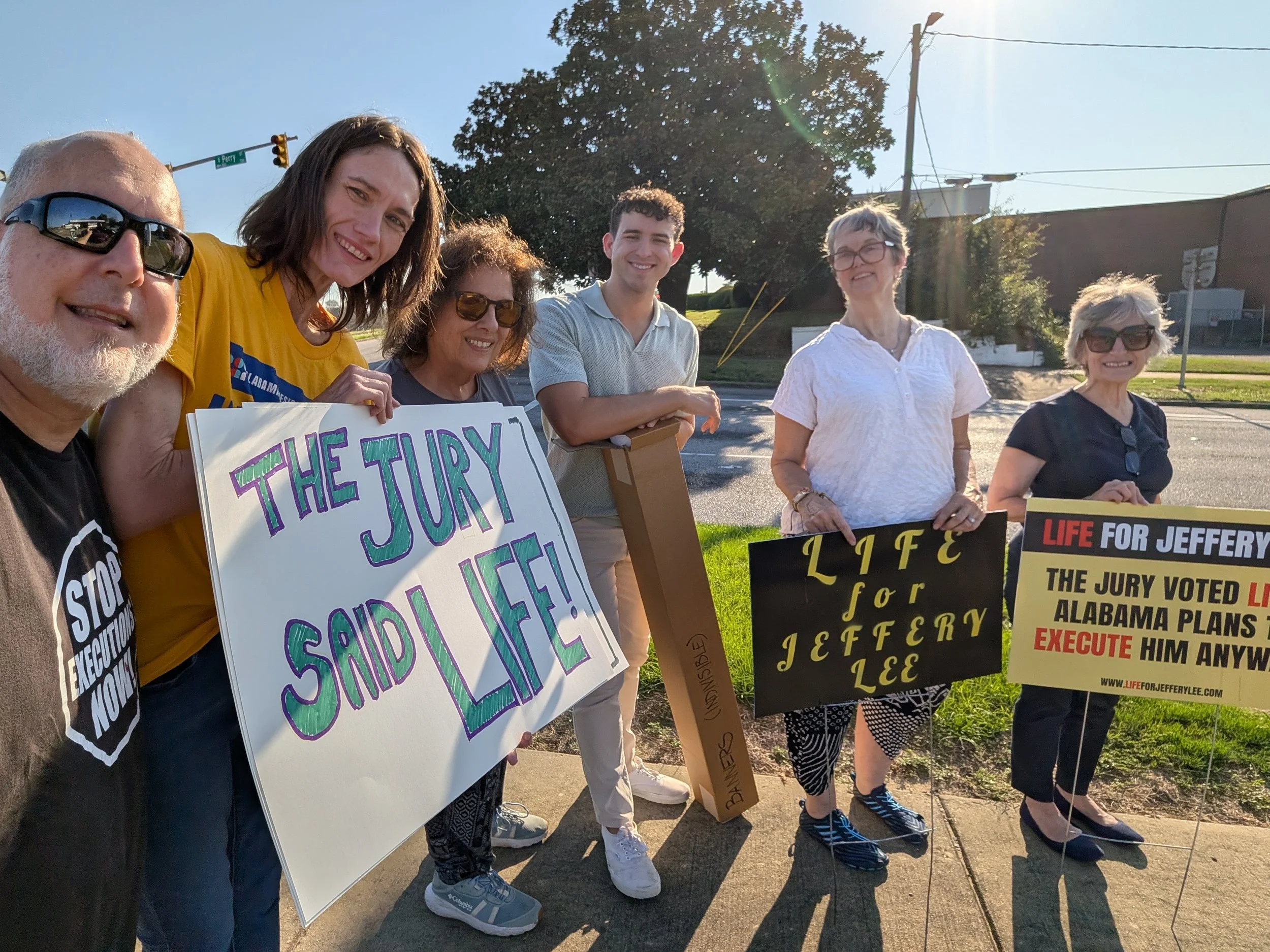
(L-R bottom row) Supporters at the Alabama Capitol in Montgomery; supporters with signs stand on an Alabama highway overpass; marquee at The Capri Theater advertising Life for Jeffery Lee film screening.
Images courtesy of Death Penalty Action. Used with permission.
Statements from Jeffery Lee
“...here we are again attending another petition and rally drop. To all those who signed the petition, sent out postcards, put up signs, visited universities, from the major work to who it might be considered minor work, in my eyes it is huge and it bigger than me. Because my issues aren’t just mine. There are others here that they’re trying to do the same thing to, in the name of justice.”
– Jeffery Lee
“The curses that were on my life have been broken. Now I find myself positive and producing in the community that I’m in. I’m making a difference in the lives of the people I encounter on a daily basis. Whether it’s teaching the word of God or giving a guy a haircut, my light is shining. I am not the product of my worst mistake. I make a choice everyday I wake up to be better than yesterday. ”
– Jeffery Lee
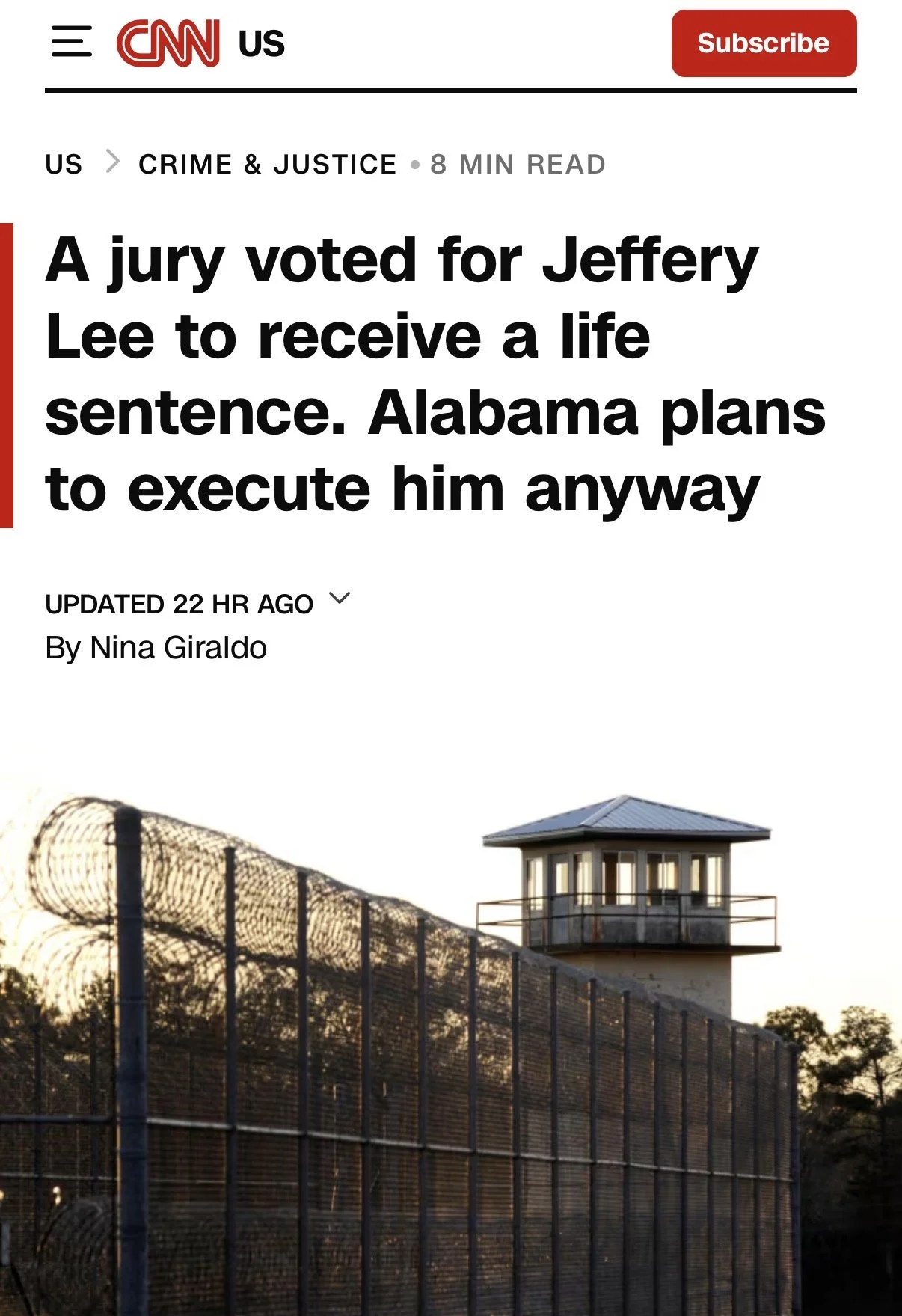
Following federal court rulings blocking Alabama's nitrogen gas protocol, Governor Ivey set a new execution date for Jeffery Lee for September 17 by lethal injection.
Jeffery is fighting for his life under a death sentence his jury voted against, a penalty imposed by a single judge under a practice Alabama has since banned.
This execution is deeply flawed, and time is running out. We need your voice now to stop this injustice and demand clemency from Governor Kay Ivey.
Take Action Now:
Call Governor Ivey’s Office (334) 242-7100
Sign the Clemency Petition
Read & Share the latest news (below)
A Message from Jeffery Lee
Jurors speak out
Mr. Lee’s jury voted 7-5 for life without parole. They didn’t know that a judge could take the power of their verdict away. Jurors talk about what it meant to have their power taken from them.
Accountability comes first
Jeffery Lee is responsible for taking lives. Nothing in his past erases that harm. The victims are not abstractions, and their loss is real and permanent.
Jeffery does not dispute the facts of the crime, nor does he ask for forgiveness without accountability. Accountability matters. Justice matters. The pain experienced by the victims and their loved ones matters.
Justice also requires context. It requires truth. And it requires that punishment reflect both the crime and the person who committed it, including whether that person is capable of remorse, rehabilitation, and change.
The question before us is not whether the crime was serious; we know it was.
The question is whether death is the only just response when a jury, after hearing only some of the mitigating factors – the context – chose life without parole.
EXECUTION DATE SET: June 11, 2026
•
Call Governor Ivey Now: (334) 242-7100
•
EXECUTION DATE SET: June 11, 2026 • Call Governor Ivey Now: (334) 242-7100 •
No jury ever sentenced jeffery lee to death.
alabama plans to execute him anyway.
For decades, Alabama's elected judges overrode juries and imposed death sentences, a practice the state's legislature abolished in 2017. Jeffery Lee’s death sentence remains a relic of that discredited system. This is not justice. This is a system ignoring its own rules.
Jeffery Lee has lived with mental illness since childhood, and people like him have the right to a jury that decides their fate. This website exists to tell the whole truth: the violence that shaped his early life, the physical injuries and untreated brain trauma that altered his behavior, the substance abuse that began in childhood, and the decades of remorse and transformation that followed.
Jeffery has lived for years under the threat of execution, yet he has chosen accountability, growth, and service. Who he is today affirms what the jury already decided: Jeffery Lee’s life should be spared.
A jury already gave Jeffery his life. Help us make sure Alabama can't take it away.
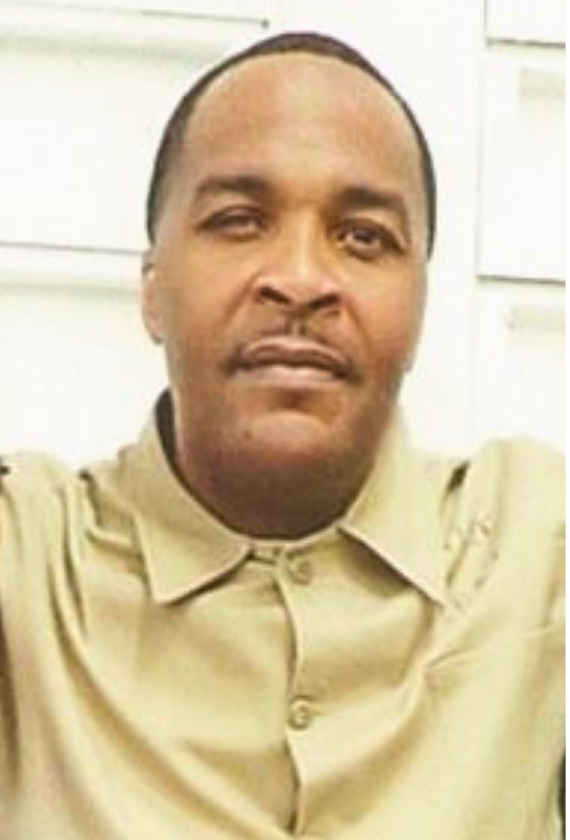
A Childhood Marked by Violence and chaos
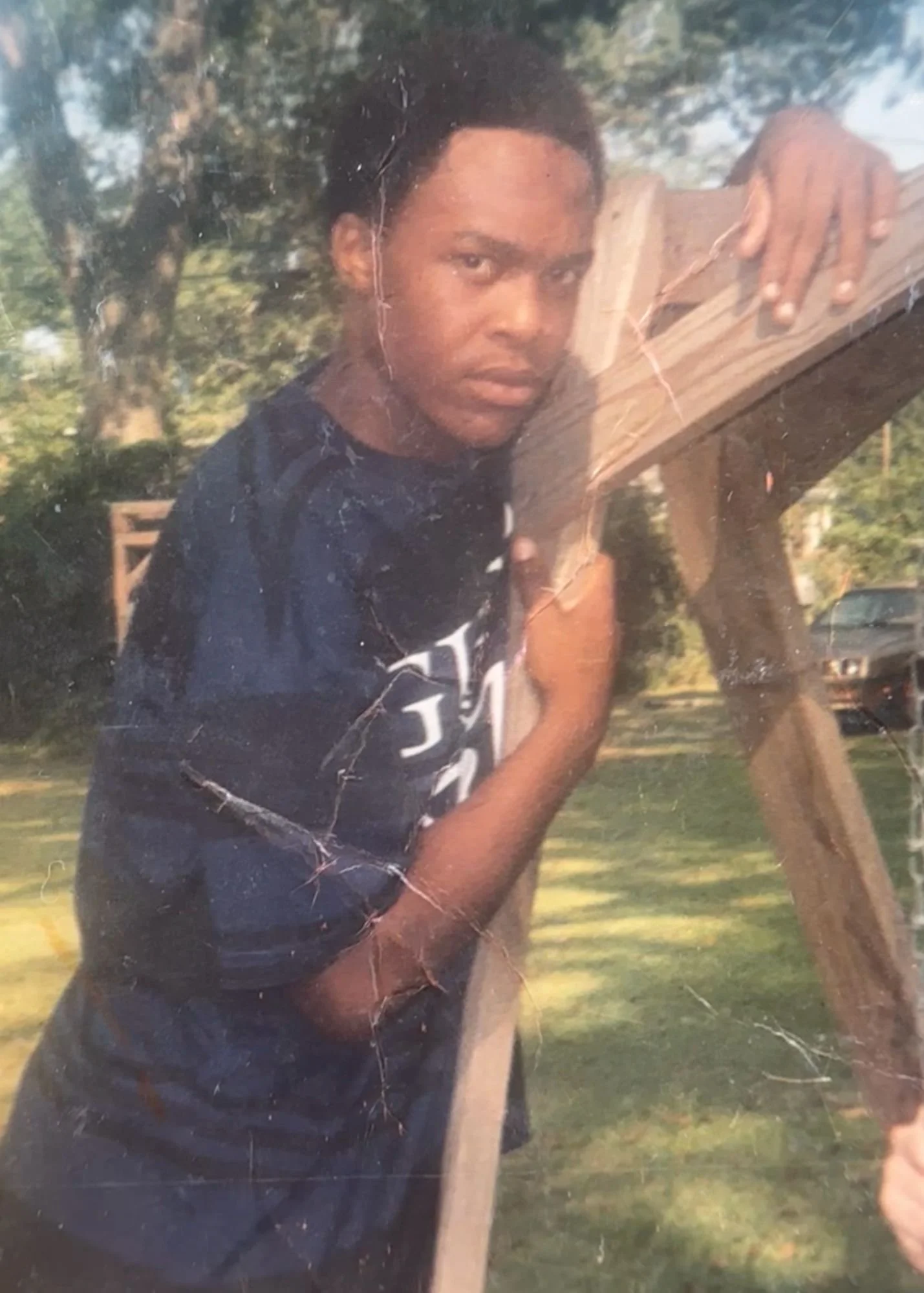
When Home Is Not Safe
Jeffery did not grow up in a safe or stable home. He and his siblings pulled toys and even candy out of the local dump. His home did not have electricity or indoor plumbing into the 1980s and ‘90s.
As a child, he endured severe physical abuse at the hands of his father. His family lived in constant fear. Violence was not an isolated incident; it was a pattern. Jeffery often placed himself between his father and his mother during these brutal assaults, trying to protect her from harm.
This was the environment in which Jeffery’s brain, judgment, and sense of safety developed: one defined by terror, instability, and survival.
Substance Use Began in Childhood
As a way of coping with the horrors of his home life, Jeffery began abusing substances at the alarmingly young age of eight years old.
He regularly inhaled gasoline, falling into brief reprieves from reality as a result of flooding his body and brain with the toxic fumes. Huffing gasoline became Jeffery’s regular practice for years, a practice that became so intense his father could smell the fumes on him – and yet no adult intervened. By the time he was 11 the headaches from huffing gasoline became so unbearable that he needed a different escape, so he turned to alcohol to numb his senses and dull the pain of his reality. What started as a means of escape from fear and pain became its own destructive force.
By the time of the crime, substance abuse compounded the effects of trauma and brain injury. Understanding this history does not excuse what he did, but it is essential to understanding who he was, how his life fractured long before the crime occurred, and how a child shaped by violence, injury, and addiction can spiral into catastrophic decisions.
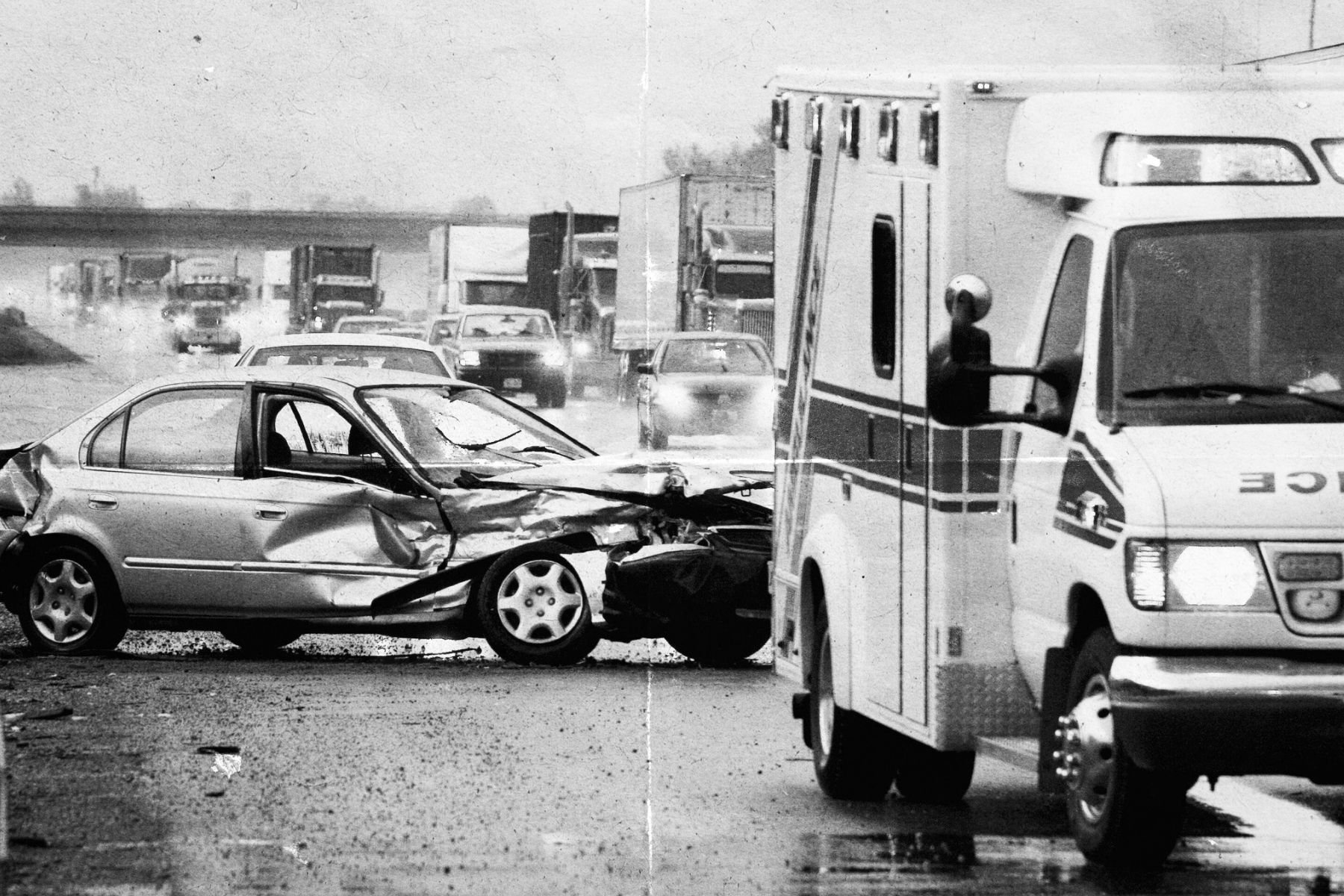
the accident that sealed his fate
traumatic Brain Injury and Lasting Impairment
As a young man, Jeffery was involved in a serious crash when his car was hit by tractor trailer, resulting in a traumatic brain injury (TBI). Following the accident, he experienced severe headaches and significant mood changes, symptoms commonly associated with neurological trauma.
Brain injuries, especially when untreated, can affect impulse control, emotional regulation, judgment, and risk assessment. When layered onto an already violent upbringing and earlier head trauma, the effects can be profound.
Jeffery did not receive the kind of comprehensive medical care or neurological evaluation that such an injury demands. He was left to cope on his own as his symptoms of TBI grew in the weeks and months following the accident. Debilitating headaches, severe sensitivity to light and sound, and unpredictable mood swings caused Jeffery to become more isolated and withdrawn in his teenage years – and to seek stronger substances to escape the reality of his daily life.

the crime.
On December 12, 1998, after an all-night binge of drinking alcohol, smoking marijuana, and smoking crack cocaine, Jeffery Lee, his cousin and brother were looking for something to do that day. Under the influence of all they’d ingested they made a terrible decision that had devastating consequences.
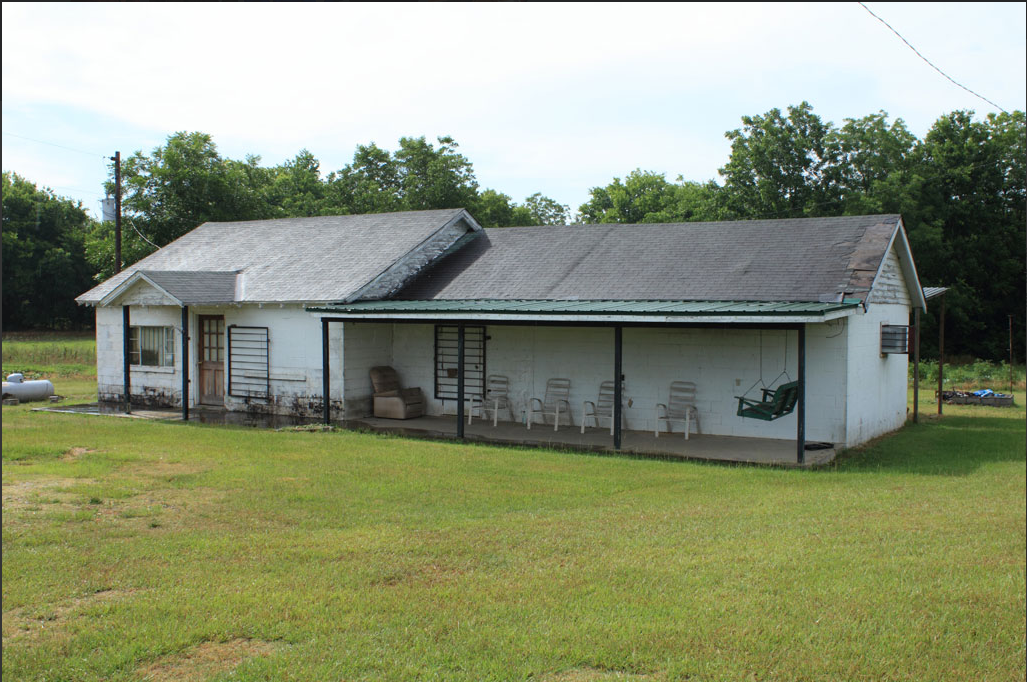
Around noon that same day, the three young men entered a pawnshop in Orrville, Alabama and, armed with a shotgun, attempted to rob the cash register. During the attempted robbery, Jeffery shot three people. Two, Jimmy Ellis and Elaine Thompson, died from their injuries. A third person, Helen King, survived.
All three fled the scene and were later caught in Georgia. Jeffery confessed soon after his arrest.
the trial.
Jeffery Lee was tried in Dallas County, Alabama, under the capital sentencing framework in place at the time. During the trial, the jury heard evidence about the crime and returned a guilty verdict. During the sentencing phase, they were asked to weigh aggravating and mitigating circumstances in determining the appropriate punishment.
After deliberation, the jury returned a sentencing recommendation.
the jury chose life without parole.
That sentence was overridden by the judge.
The Jury’s sentence and What Followed
By a 7–5 vote, the jury sentenced Jeffery Lee to life without the possibility of parole, concluding that he should spend the rest of his life in prison rather than be sentenced to death.
At the time, Alabama law treated jury sentencing verdicts as advisory rather than binding. Under that system, the trial judge rejected the jury’s life sentence and imposed a sentence of death instead. [This practice is known as judicial override; in 2017 Alabama became the last state to abolish this law].
In reaching that decision, the judge was permitted to consider information outside the jury’s presence, including a presentence report the jury did not review. Court records also reflect that while some mitigating evidence was presented, additional mitigation existed that was not placed before the jury during sentencing.
Even within that framework, the jury chose life.
Jeffery Lee remains on death row because the law allowed a single official to override the judgment of the people charged with deciding his fate.